Showing posts with label movie review. Show all posts

Tuesday, January 07, 2025

The Musical "Come From Away" Offers Hope in Trying Times

I recently streamed the live capture of the Broadway performance of Come from Away on Apple TV+.

The award-winning hit musical Come From Away tells the incredible true story of the people of Gander, Newfoundland, who opened their homes and hearts to thousands of airline passengers who were forced to land there when the U.S. airspace was shut down on September 11, 2001.


It has been a while since I’ve written a review for Reel Inspiration. (My blog supporting inspiring and meaningful films.) But I can’t get Come From Away out of my mind. This is the second night that I woke up trying to find words to articulate why I was so moved by this musical. I was even more moved by the second viewing. It seems like the audience for the live performance didn’t want to leave the world of the play, either. At the end the musicians perform front and center and the audience celebrates the experience by enthusiastically clapping along. How could this play with a minimal set be so moving? Was it the spirited songs by writers Irene Sankoff & David Hein or the committed, enthusiastic performances from a diverse cast of regular people (some of whom could be your aunt or neighbor)?


All that is great, but it’s the kindness that really gets me. Sorta like when the town’s people come out to save George Baily in It’s a Wonderful Life. After all the cruelty George endured from the greedy banker, it’s so rewarding to see the community rally to save him. There is such joy in it. Honestly, I cry every time I watch it.

I believe everyone brings their own experiences to the theater with them and that’s how we relate to the story. For me, it was the frustration and deep disappointment from the push back against our efforts to create a more sustainable future for Tucson. As Tucson (and the world) continued to heat up and droughts become more extreme, we discovered a hopeful solution in planting cooling native shade trees in rainwater basins. Who would have thought that trees, of all things, would be attacked? That people would remove trees faster than Tucson Clean and Beautiful could plant them? That some landlords would remove them to avoid the expense of maintaining them? One politician even ran on the platform “A million potholes fixed instead of a million trees planted.” – taking a jab at the mayor’s 1 million tree program. Over 70 trees were removed from one neighborhood nature path to keep homeless from taking shelter under them. I find that kind of cruelty depressing. And it seems to be all around us these days.

So watching this play was exactly what I needed. The hope, collaboration, and sheer humanity of this story is so inspiring. It was so uplifting to watch the community of Gander come together and work around the clock to provide for the needs of the exhausted, frightened travelers. Beyond taking on the huge task of providing for the travelers’ physical needs (a place to stay, food, and clothing), the community did what they could to support their emotional and spiritual needs as well. Televisions were provided so they could keep up to date on the tragedy unfolding and cellphones so people could ease the worry of their families back home. One woman took care of the animals locked in the cargo holds. A safe, quiet place was provided for people of different faiths to pray. The town even organized a huge barbeque so the people could connect. They embraced their shared humanity.

I don’t know what experiences you bring to the theater, but if you need an inspiring story that celebrates community, hope, and our shared humanity, this might be just the antidote you need.

More information on the musical production here: 

If you need an outlet for your rage (believe me, I've been there), you might prefer:

Monday, April 02, 2012

"Harry Potter and the Deathly Hallows, Part 2"

OK. I know this is a tad late and the Harry Potter franchise doesn't need my help promoting it anyway. But I wanted to include it on my, "Most Inspiring Films" list - so here it is. First off, I will admit that I am a fan. I am completely captivated by the fanciful flights of the imagination in the magical world of Harry Potter. If it were on TV right now, I would be watching Harry and his friends' quest to find and destroy Lord Voldemort's Horcruxes (the instruments of his power.) Because, "Harry Potter and the Deathly Hallows, Part 2" was one of the most compelling, suspenseful, awe-inspiring movies of the year and definitely the most satisfying ending to a franchise EVER.

Director David Yates and screenwriter Steve Kloves nicely tie up all the story-lines and resolve relationship issues while sending us on roller coaster ride of adventure. But what makes, "Deathly Hallows," so satisfying is that Harry is no longer isolated in his quest. My heart cheered as the whole school of Hogwarts united in the fight against Voldemort - in one of the most suspenseful sequences I've seen in a long time.

Perhaps one of the reasons that it is so suspenseful is that I've really grown to care about these characters - hogwarts and all. In this final installment of the series, Harry finally comes to grips with his darkside. In fact, he gains greater strength and wisdom from conquering it. There is a deep satisfation in knowing that our heroes are as flawed (if not more so) than the rest of us, yet they still make a difference in their world.

Movie blessings!
Jana Segal
www.reelinspiration.blogspot.com


Sunday, April 01, 2012

Jana's Guilty Pleasure - "Midnight in Paris"


"Midnight in Paris" is Woody Allen's love letter to Paris. For me it's total wish full-filling escapism. I can watch it over and over just to be in Paris during artistic Renaissance of the 20s and hang out with the visionary artists of the time. It is the story of Gil, a Hollywood screenwriter, (Owen Wilson in the Woody Allen role) who joins his fiancee (Rachel McAdams) and her family on a business trip to Paris. Being in the "City of Lights" rekindles his dream of living in Paris while he writes his novel. Unfortunately, his fiancee and her parents have more lucrative plans for him. In an effort to escape the ensuing conflict, Gil takes a midnight walk and ends up in 1920's Paris. This is a dream come true for the aspiring novelist as he mingles with great artists (Picasso!) and his literary idols including Hemingway himself! His heroes become his peers and even give him advice as he pursues the enchanting young model who eventually becomes his muse.

It is unusual for such a lite-weight romantic comedy to win an Oscar for Best Original screenplay. But, "Midnight in Paris," is highly original.  The action shifts effortlessly back and forth between two time periods. That takes real writing chops. At least Allen has placed his alter ego in a fresh new setting.  In fact, this is one of the most enjoyable Woody Allen films to come out in years.

Have you ever had the feeling that you were stepping back in time as you strolled down a narrow cobble stone street or visited the old haunts of a favorite writer? Then, "Midnight in Paris," should delight the romantic in you and maybe even inspire you to follow your true passion.

Movie Blessings!
Jana Segal
www.reelinspiration.blogspot.com


Wednesday, March 28, 2012

"The Descendants"


There are times in our lives when our world comes crashing down and we are completely unprepared. Shocked and clueless, we grope around making awkward attempts to deal with the overwhelming situation or to just get by. Like the day my whole life was thrown out of whack when my husband of 23 years announced he wanted a divorce and moved out that afternoon. I did my share of groping to find my footing - not always handling it with the best of grace.

I guess that's why I relate to Alexander Payne's, “The Descendants.” Payne (and Oscar winning co-writers Nat Faxon and Jim Rash) aren't afraid to present a flawed main character, Matt King (George Clooney), who is absolutely clueless about how to handle the life shattering situation he finds himself in when his wife ends up in a coma as the result of a boating accident. To add insult to injury, he discovers that she was cheating on him at the time. It's a one-two punch that leaves him stunned and reeling.

Matt lives in Hawaii, in paradise, but has been so caught up in business transactions that he can't take in the beauty around him. His time has been spent negotiating deals with vacation resorts and condos to sell the pristine forest entrusted to him and the other descendants. This piece of land represents all that he has lost in his life. There was a time that he took his family on regular camping trips there. But he has lost his connection with the land and his family. He has become an absentee husband and father. In fact, he is absent from his own life.

Sometimes it takes a catastrophic event to shake us awake after sleep walking through life. (It took my husband leaving me...) Having been JOLTED awake, Matt is ill equipped to deal with the fall out from the accident on his two troubled daughters. George Clooney brings out the humor as his character gropes around trying to make some sense of the whole mess. When he hears that his wife was cheating, Matt, still in shock, charges off in his clumsy flip flops around a ridiculous circular drive – in search of answers, anything... Later, we can see the inner turmoil in his eyes even as his daughter splashes in the ocean and life goes on around him. Once he has dealt with his own issues, he is better equipped to help others cope with the tragedy. Finally fully awake, Matt sees that he is a part of something bigger than himself. He realizes his responsibility to the land, himself, and those around him. Procuring his place in the world puts his problems in perspective.

As for me, I'm grateful to be awake and learning life's lessons.

Movie blessings!
Jana Segal
www.reelinspiration.blogspot.com

Thursday, March 15, 2012

"Extremely Loud and Incredibly Close"

What you might not know about me is that despite a fairly embarrassing learning disability (I was the one kid in my school who was in both special education and the gifted program), I actually have a very active problem solving mind. I loved unraveling the enigma that was the "Tree of Life" for my review on reelinspiration.blogspot.com. I loved every minute spent solving the puzzle of what really happened behind the gunfight at the OK Corral for my Tombstone comedy. So it's no wonder I greatly enjoyed, "Extremely Loud and Incredibly Close." It basically takes the audience on a problem solving reconnaissance mission. To be honest, I relate to it in other ways as well.

According to his dad (adorably played by Tom Hanks), the way Oskar sees the world is a gift. Oskar's (Thomas Horn) overly active mind continuously scrutinizes the connections he observes in order to make sense of the physical world. Things he can't observe – like people's feelings (including his own) - are elusive and frightening to him. For a boy in need of concrete answers, even the inconclusive results of his Asperger Syndrome test are unsettling.

His dad's gift was to find creative ways to challenge his son. Their favorite games were reconnaissance missions. One such mission was to search the five boroughs of New York for something from every decade. In the process, Oskar spoke to people from all walks of life. The purpose being to overcome his fear of interacting with people. True to form, Oskar comes up with a concrete answer to the riddle – a rock.

When his father is killed in the 9/11 tragedy, Oskar is ill equipped to make sense of the senseless act. His mother (Sandra Bullock) buries an empty coffin in an awkward attempt to make his father's death more real for him and Oskar is outraged at yet another senseless act. Searching for some part of his father to hold onto, Oskar digs through his father's closet and discovers a key inside an envelope with the word BLACK written on it and a newspaper clipping indicating that he should keep looking. Did his father leave him one last message locked away somewhere in the city that only this key can open? The audience is invited along on one last reconnaissance mission. We observe as Oskar constructs an elaborate filing system to chart all the people in the city named Black and set off with him in search of the answer.

Oskar becomes obsessed with this mission because it is the only way he can feel connected to his father. As Oskar compulsively traverses the five boroughs in search of the lock, he inadvertently learns the lessons his father set out to teach him. He makes connections with other New Yorkers with their own stories of heartache from 9/11. The quest gives him a concrete objective enabling him to deal with unmanageable feelings of guilt, fear, grief, and redemption. He faces physical manifestations of his fears – such as crossing a bridge - that he can overcome. The quest gives him a concrete method to deal with a tragedy that makes no sense.

Thomas Horn does a fine job creating a sympathetic character with some very unsympathetic Aspberger traits. The young actor handles both the intensity and humor effortlessly. But not all the credit goes to the actor. For the benefit of the writers out there, I'll share a writing device that the was successfully used by screenwriter Eric Roth. Considerable time was spent setting up the father's love of the boy and his gifts - so we are already rooting for Oskar well before we witness his negative traits (being rude to the door man and the intense meltdowns).

One of my readers suggested that I include more of my opinions on the films. There was one thing that bothered me a bit. The movie went on well beyond the point where I felt there could have been a satisfying ending – presenting several resolutions. But that was the result of the multi-layered story. That's a price I'm willing to pay for a story with some depth.

I believe one reason we go to the movies is to find meaning in the senseless events of our lives. Perhaps there is no way to come to a solid understanding of the senseless act that was 9/11. But "Extremely Loud and Incredibly Close," offers hope that we can find some comfort in our shared experience and our connections with others.

Movie blessings!
Jana Segal
www.reelinspiration.blogspot.com

Monday, September 19, 2011

"Buck" A Pret'near Perfect Picture


As a rule, I don't review documentaries. But I'm making an exception because, "Buck," is one of the most inspiring films I have ever seen.

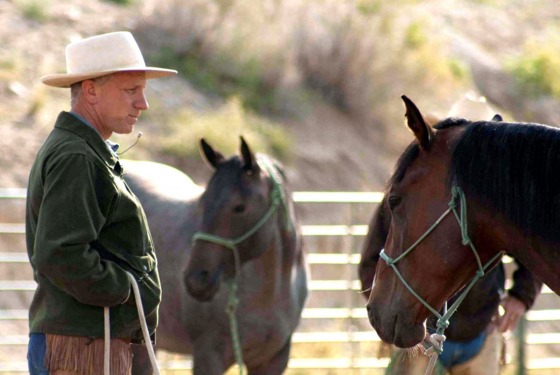
"Buck" is pret'near perfect picture. You have your likeable hero, Buck Brannaman, a wounded soul who overcame an abusive childhood and personal weaknesses to forge a better path in training horses. When he started his horse clinics, he couldn't even look people in the eye but he grew to be a gifted teacher. And, boy, is it entertaining. At six, Buck was a professional trick roper. There are nostalgic clips of him on “What's My Line” and as the spokesman for Sugar Puffs cereal. He was the inspiration behind the movie, “The Horse Whisperer.” Robert Redford talks about working with Buck on the set. When the Hollywood trainer couldn't get the trick horse to perform the action needed for the scene, Buck got his own horse to do it in 15 minutes. The horse came right up to young Sharlett Johansson and put it's head against hers. It brought the whole crew to tears.

Buck is very intuitive in his understanding of horses. He demonstrates a way to train the horse that the animal can relate too. “It is all a dance,” he says. It's about trust and balance, not about force. He's looking for the horse to follow his “feel.” Before he even gets on the horse, he has the horse on the end of the lead rope (with a bit of slack) and directs it.

There is a history of abuse in training horses - the very idea that a man has to “break” this big animal to show that he is stronger. It takes a tortured soul to understand the abuse these animals have gone through. Having survived being abused himself, Buck is sensitive to their reaction to being “broken.” Buck explains “When something is scared for it's life, I understand that.”

Buck has risen above his traumatic upbringing. His experience taught him to be an empathetic reader of horses and people. And he deals with all kinds – colts that have never been ridden to troubled stallions. “A lot of the times instead of helping people with horse problems, I'm helping horses with people problems,” he shares. “All of your horses are a mirror to your soul. Sometimes you might not like what you see.” In a dramatic, heartbreaking sequence, he confronts the wounded owner of a vicious, out of control animal. “Maybe there's some things for you to learn about you. Maybe the horse is gonna be the only damn way you're gonna learn it.”

Director Cindy Meehl
Animal activist/Director Cindy Meehl wrangles the humanity out of Buck's job. Through working with their horses, the owners are transformed. They learn to let go of trying to force their will on others. “If you find a way to fit this thing right here, it'll make you better. It'll make you better in areas you didn't think related to horses.”

You don't have to be a cowboy to enjoy this film. I took my city-slicker boys to be inspired by Buck.

Movie blessings!
Jana Segal


Sunday, September 18, 2011

"The Tree"


Despite their shared theme of dealing with loss, "The Tree," is a very different movie than the hard to watch, impressionistic, "The Tree of Life." I found Director Julie Bertucelli's poetic sensitivity more heartfelt and accessible.

Eight-year-old Simone is enjoying a joy ride standing up in the back of her father's pick up when it goes off track and rolls into the sprawling, twisted tree shading their house. She finds her father dead inside the cab.

The family's world is turned up side down – not only by of the loss of their father, but also by the loss of their mother (Charlotte Gainsbourg) when she retreats into a deep depression. The oldest son tries to keep things together, but it is more than he can handle with his own grief and anger.

SPOILER AHEAD

Unable to accept that her father is gone, Simone begins to hear her father's voice in the tree. To be near him, she climbs high into the branches. This frightens her mother out of her isolation. The girl sets up a bedroom cradled in the tree branches to spend more time with her father. At first her mother is worried, but then she does something startling – she listens to the tree and hears his voice too. She finds comfort in the idea that her husband is there. The next morning, the children discover their mother curled up in the roots of the tree.

Director Julie Bertucelli
The family experiences a rare moment of joy when funny yellow frogs emerge from the toilet drain. The roots of the tree have blocked the pipes and it is almost like their fun loving father is trying to say it's time to lighten things up, there is still joy in life. The little girl seems to have learned that lesson. When her friend asks her why she isn't sad anymore, she replies, “You have a choice to be happy or sad. I choose to be happy and I am happy.”

The root incident motivates the mother to finally go out into the world to find a plumber. She manages to get a job with the plumber (and possible new beau) George (Marton Csokas.) That night a huge branch breaks through the window into her room. Unfazed, she crawls into her bed with the fallen branch and wraps its limbs protectively around her.

When her plumber boyfriend comes to survey the damage, he is shocked by the degree of damage that she has been living with. “You didn't tell me it was so bad.” But he is even more shocked by her reply, “I don't think it was trying to hurt me.” It becomes evident that she is overwhelmed with adult responsibilities when she says, “I know I need to do something, but I don't know where to start.” She leaves it to her new boyfriend to handle. But when George arranges for a tree service to remove the tree, she sends the workers and George away. Her attachment to that tree threatens to destroy the very foundation of their home. Mom must grow up and find the strength within herself to protect her family.

"The Tree," is captivating in its beauty, compelling in its action sequences and poetic in its symbolism. It has a valuable theme on the importance of pulling together as a family to survive loss.

Movie blessings!
Jana Segal
www.reelinspiration.blogspot.com


Wednesday, September 14, 2011

"Larry Crowne"


by Guest Reviewer Josh Valentine
Indiebum

Tom Hanks’ “Larry Crowne” is a film that your mom goes to see with her girlfriends. It’s what appears run-of-the-mill romantic comedy starring everyman Tom Hanks and America’s sweetheart Julia Roberts. In some ways, that is the film. But the miracle of “Larry Crowne” is its immediacy and its passion for the human experience. This is a film that came and went in the theaters and it will be forgotten. It shouldn’t.

The film, co-written with Hanks by Nia Vardalos (“My Big Fat Greek Wedding”), and directed by the man himself, is about finding purpose. For most people, it is through purpose that life’s meaning is found. For some, raising a family is their purpose and that gets them through their existential woes. For others, they find this solace in their work. This is the focus of Larry Crowne’s life at U-Mart until he is laid off due to his lack of a college education. Crowne (played with dependable pluck by Hanks) faces a new chapter in his life – a chapter he never expected. He enrolls at the local community college where he meets Mrs. Mercy Tainot (Roberts), a speech and communications professor who’s at her wit’s end of a terrible marriage. He also meets Talia (Gugu Mbatha-Raw), a free-spirit who introduces him to the comfort of being cool. Larry begins to re-experience the life he’s felt he missed after his 20 years in the Navy. “Larry Crowne” is very much a film that encourages the idea that the experience of living is in itself what must be appreciated. For the three major characters, the achievement of purpose is what enlightens their existence.

Hanks, Roberts and Mbatha-Raw all portray their own character arcs to exhibit the theme of purpose. Hanks’ Crowne is generally optimistic, but never felt his past had any merit worth mentioning. He hides from his passion of cooking, because he felt he had done it too long in the Navy. His re-invention is a catalyst for his return to his passion and he is able to grow, even in middle age. Roberts’ character is borderline depressed, and wants to find purpose in her teaching. Thanks to Larry Crowne, she not only re-discovers her enthusiasm – but also finds the grown up man she’s been looking for. The character of Talia is pure optimism but is seemingly lost. When she drops out of college to pursue her dream of owning her own business, she finds her purpose. All of these character arcs seem relatively inconsequential, but really show how something so meaningless can actually change a person’s life forever. The film is surely fantasy, but it’s ideas and main themes of finding purpose are essentially human. This is a human film.

“Larry Crowne” ended its theatrical run recently, but will be on DVD and Blu-ray in November. It’s not essential viewing, but highly recommended. It might even help you find you your purpose.

Sunday, September 11, 2011

Inspiring Films Create Understanding

I remember when 9/11 happened, I sobbed for what I thought would be a loss of what makes us American - our freedom. Fear is such a powerful weapon! But I believe that films of substance have power too. That's why I promote meaningful films that show that we are more alike than different.


"Why can't we just get along." See it can be done. Like this dog and cat.

Inspired by that principle, I organized the Reel Inspiration film contests. There were two shorts that especially made it worth the effort. 2004 finalist Morning Submission by Justin Mashouf creates understanding with his powerful three minute film on why Muslims pray. This little wonder shows that their prayers are much like ours. And 2006 "Best of Tucson" winner, Have Coffin, Will Travel by Sarah Sher shares how Dale Clark, an 83 year old artist and activist from Bisbee, Arizona, hitchhikes with a coffin to bring attention to the approximately eight thousand children of Afghanistan and Iraq who lost their lives as a result of war. This whimsical short is a gentle reminder that we aren't the only ones affected by the war and that these are our children too.

On this anniversary of 9/11, we can honor those who died by choosing not to be defeated by fear, but choose instead understanding over hate and connection over separation.

Movie Blessings!
Jana Segal

Tuesday, September 06, 2011

"Another Earth."


It is as if another earth illuminates the night sky in celebration of Rhoda's acceptance into MIT's astrophysics program. But her dream is shattered when she drives into a family's car instantly killing mother and son and leaving the father in a coma.

Released after five years in prison, Rhoda (co-writer Brit Marling) wanders the streets an outsider in her home town. She is a stranger in her own room, even in her own skin. She seems to be serving a self-induced penitence when she accepts a job as a school janitor so she won't have to talk to anyone. Should she be allowed to live when she took another person's life? Filmmaker/co-writer Mike Cahill creates a feeling of being outside herself by photographing her through windows and odd angles. This is one of those movies where the experience is enhanced by what the viewer brings to it. And there are plenty of silences to allow the audience to ponder what would have been had they made another choice in their own life.

Co-writer/Producer/Actor Brit Marling
Cahill uses the device of distant radio and TV broadcasts about the newly discovered Earth II as a way to share Rhoda's self reflections. The radio announcer confirms that the earth has been duplicated. “There's another you out there. Now you begin to wonder - has that “me” made the same mistakes as I made?” Maybe the other me made a better choice. Rhoda has an opportunity for a second chance. She enters an essay contest to win a shuttle ride to Earth II. She writes how the first explorers of Earth II should be the disenfranchised and criminals (like herself) because that's who first settled the New World – people who had nothing to lose.

Everything changes when she sees a man leaving a toy robot by the side of the road where the accident happened. She does a google search and finds that the boy's father (John Burroughs), previously a music professor, concert musician, and gifted composer, has come out of his coma. She becomes obsessed with the life he's lost. She goes to his house and finds him sleepwalking through his life and self-medicating. Consumed with guilt, she knocks on his door to confess, apologize, anything. She ends up offering him a free trial of her housekeeping services.

It is genuinely touching watching as the connection between these two wounded souls begins to bring them back to life. But what if Rhoda is chosen to go on the shuttle to Earth II? Will she find a smarter version of herself who made a better choice? Is it an opportunity for a second chance or suicide?

"Another Earth" looks like sci fi, but it is actually a very human drama. The discovery of Earth II acts as the framework to explore the life we create with our bad choices, the inherit regrets, self-forgiveness and redemption. Despite the tragic circumstances, Another Earth is really a story of hope.

Movie blessings!
Jana Segal

www.reelinspiration.blogspot.com

Sunday, August 28, 2011

"The Help"


In the prelude, Abileen stoically tells an unseen interviewer that her grandmother was a house slave and her mother was a house maid. She, herself, has raised 17 white children. A naive voice asks if she ever thought of being something else. Her answer is the blank stare of resignation passed on from generations of subservience.

The movie proper starts with recent college grad Skitter (a wide eyed Emma Stone) being interviewed for her first newspaper job. Skitter is hired to write a housekeeping and cooking column – a subject she knows nothing about. No matter. While at a bridge club meeting, she asks her friend permission to interview her maid. Ironically, the maid, Abileen, is the only one she knows who keeps house. It becomes clear that her friend sees Abigail as her property when she catches Skitter affirming Abileen's contribution to the household. She tells Skitter that Abileen will be unable to continue working on the project.

Upset by her friend's mistreatment of Abileen and the unexplained absence of the beloved maid who raised her, Skitter is inspired to write a book on the maids' perspective of working for a white family. Her editor warns that she will never be able to get any maids willing to risk their jobs or their lives to talk to her. It is dangerous. It is 1960, the dawn of the civil rights movement. Jim Crow laws make it illegal to even print civil rights material. Tensions mount as a black activist is killed. The fear is palpable as black passengers are thrown off the bus near the murder sight and Abileen flees for her life past race riots.

This movie is about the shared delusion that blacks and whites in the South were separate. In 1960s Jaskson, Mississippi, Jim Crow laws and bridge club etiquette rule their lives. The laws were designed to separate the whites from the blacks, but black women had always worked very close to white families - preparing their food, cleaning their bathrooms, and changing their babies' diapers. For generations, the black “maids” raised the white children. Skitter explains to her publisher, “We are raised by our black maids. They love us and we love them, but they can't use the same bathroom.”

The setting is the domestic world of kitchens, nurseries and bathrooms which gives ample opportunities for kitchen (and bathroom) humor. On the whole, writer/director Tate Taylar does a good job balancing comedy and drama. The 146 minutes flies by with some laughs, tears, and dramatic tension. But sometimes the comedy goes a bit over the top. Hilly starts a petition initiating a law to have separate bathrooms for the help - even though her feisty maid, Minny, is the envy of the bridge club for her great cooking. This gives new meaning to the phrase, “Don't crap where you eat.”

There are multiple storylines. Care is given in showing the intertwining lives of the blacks and the whites. The writer seems to be saying both races are enslaved by the cultural restrictions of the time. Even Skitter's mother couldn't stand up to the bigots in her social club. She admits to Skitter, "Sometimes courage skips a generation." But it's the performances of Viola Davis as Abileen and Oscar winner Octavia Spencer as Minny that holds it all together. Davis adds gravity to every scene she is in. In Abileen's carriage we see the weight of generations of suppression as well as the personal risk she is taking with her involvement in the taboo book. Minny is different. After working for segregationist bridge club president Hilly, Minny has had enough. She is a fire cracker ready to explode. These women are survivors. But they have risen above that. They have stood up to their fears. They are heroes in their own civil rights protest and free women. I can't say so much for Hilly and her bridge club.

Movie blessings!
Jana Segal
www.reelinspiration.blogspot.com

Official site: http://thehelpmovie.com/us/

Friday, July 08, 2011

“QUEEN TO PLAY” IS THE RIGHT MOVE


guest reviewer Chuck Graham, TUCSONSTAGE.COM

Watching “Queen To Play” is a lovely way to sink into the comforting darkness of the Loft Cinema, 3233 E. Speedway Blvd., in the reassuring company of intelligent friends to enjoy an adult fairy tale of life’s possibilities in middle age.

While it is annoying enough that the boomer generation has forced the indulgence of its life cycle on all of us -- from the discovery of sex to the fear of dementia – there are certain unique opportunities during one’s 40s and 50s that don’t occur at any other time in life.

The children are grown, one’s own economic level is defined, daily routines are well established. As the days seem to speed up in their determination to push us toward old age even faster, a new spark of resistance is struck…one much like the teenager’s first resistance to authority.

Adding urgency is the conviction this could well be the last chance to strike out on a new, potentially life-changing, adventure. American movie makers will no doubt fill their movies for this middle-aged market with lots of screaming digital special effects thumbing their collective noses at AARP.

Queen To Play” is a French film much more gracious than that. Sandrine Bonnaire as Helene begins her story as a responsible maid at a family hotel in sunny Corsica. Her life is set. There isn’t much money, but her husband is handsome, hardworking and loyal. Her 15-year-old daughter is prickly, but she doesn’t have any tattoos. Yet.

Upon arriving at work one lovely morning, Helene is invited to clean the room of a couple out on the balcony enjoying a game of chess and very much enjoying each other. Their lives seem so magical to Helene. In one moment she realizes how the chains of routine and the obligations of necessity have combined to lock her into the cell of compromise, denied forever any opportunity to enjoy any fuller use of her personality.

The shock is palpable. When Helene later discovers the lovely woman has accidentally left her silk dressing gown behind, Helene takes it home. She also buys her husband Ange (Francis Renaud) an electronic chess set for his upcoming birthday.

Ange quickly rejects any interest in learning to play chess. In the middle of the night Helene is reading the instruction book and playing a solo game against the electronic chessboard.

Awhile later, while cleaning the home of the perpetually grumpy and retired Dr. Kroger (Kevin Kline, always speaking French), Helene discovers his chess board. Drawing on all the courage she can muster, Helene asks if Dr. Kroger will teach her to play, in return for free housekeeping services.

Dr. Kroger may be living more comfortably, but his life does seem empty. Yet, he is not a philandering man. In his life, propriety is king. For Helene, chess is queen – for she is fascinated by a game where the king’s mate has the most power.

The enjoyment in “Queen To Play” is in finding so many delicate layers of possibility within the story. As the doctor teaches the student, she quickly discovers a natural aptitude for the game. The more quickly she learns, the more he admires her.

The more he admires her, the more she feels ignored by her husband Ange and unappreciated by her daughter Maria (Valerie Lagrange). Gently we are brought to see in their story how easily the daily life we make more or less by accident and coincidence becomes hardened into the life we cannot change.

It is Dr. Kroger who suggests Helene enter an upcoming chess tournament. She has become the better player, so he will become her trainer, sharpening her skills to win.

Helene’s toughest battle is at home, where husband and daughter selfishly don’t want their wife/mom to get so distracted from taking care of their own personal needs.

There is more to the plot, but this is not a plot-driven film. The enjoyment is in the portrayal of the changing relationships, and the layers of implication in each change. Nicely enough, “Queen To Play” is slowly paced with plenty of time for reflection on all these changes.

In French, with subtitles.


Thursday, July 07, 2011

"Bill Cunningham New York"

It's already been a long, hot summer in Tucson, AZ. It's 110 outside and I'm dying to get into an air-conditioned theater. I scroll down the movie listings. Nothing but a bunch of unimaginative, dried up remakes (some of which you couldn't pay me to see in the original version) and a dumbed-down romantic comedy that I've already seen.

Thank Heavens for my oasis in the desert. During Hollywood's intellectual and emotional drought, the Loft Cinema offered a stream of refreshing foreign dramas, thrillers and comedies. And when I had seen all of those, there were the documentaries. Watching documentaries is a fairly new theater experience for me. When I thought of documentaries, I thought of dry educational programs. But a new kind of doc has emerged - quenching my thirst for fascinating characters and compelling storytelling. One such documentary is, "Bill Cunningham New York."

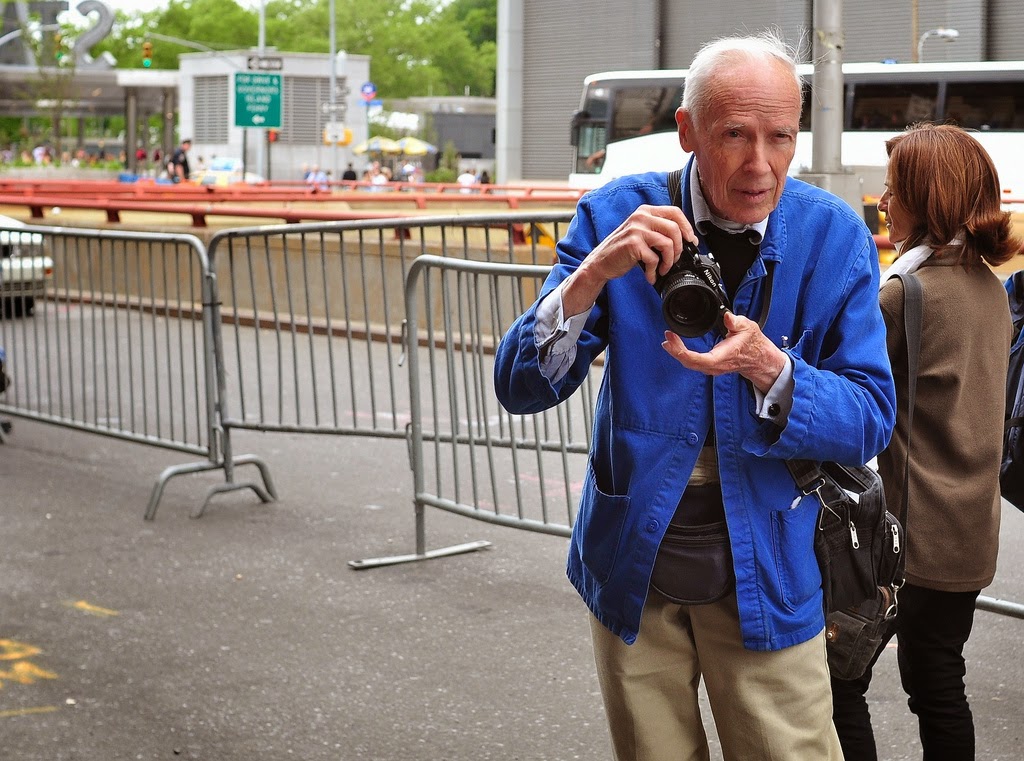
While watching the trailer, I knew I was in for a good time when Vogue editor Anna Wintour (made infamous by, The Devil Wears Prada) quips, "We all get dressed for Bill." The trailer is full of testimonials from fashion icons and socialites on photographer Bill Cunningham - the schwinn-riding octogenarian who weaves through Manhattan traffic trying to capture the latest "street style" fashions. Cunningham obsessively documents fashion trends and society charity events for the style section of the Times. I didn't expect much more than a interesting character study, a love letter to NY, or a tribute to a by-gone era of high society. But it was more than that. It was one of the most inspiring films of the year.

Bill Cunningham. This man lives his passion. He initiated the concept of "street style" when he started snapping flower children's threads in the sixties and went on to document emerging street trends through the decades. In his column, Bill presents the definitive fashion show taken right, "On the Street." His meticulously arranged fashion layouts can be read like a thesis in urban anthropology expressing the styles of the times. And in his show, everyone one is treated equal - from societies' grande dames to colorful eccentrics. The only thing that matters is fashion.

This is a man who unapologetically lives life on his own terms. He lives fashion. He sleeps in a tiny studio, his bed squeezed in between file cabinets full of every photo he ever took. He even refused payment for his moon-lighting magazine gig so he wouldn't have to take orders from anyone or "sell out" his vision. He doesn't do it for prestige, money or fame. (He is notoriously camera shy.) He does it for the beauty of the art. On one of the rare occasions where he agreed to accept an award, he tearfully gushed, "You can find beauty if you look for it!"

I found beauty here.

If you love NY, you won't want to miss it.

Movie blessings!
Jana Segal
www.reelinspiration.blogspot.com

Sunday, June 26, 2011

"The Tree of Life"


“Where were you when I laid the earth's foundation... while the morning stars sang together and all the sons of God shouted for joy?”

A beam of light unfurls.

THE TREE OF LIFE is a reflection on the meaning of life. What is the filmmaker trying to say? That is highly subjective. Aside from an opening narration that cues us in on the theme, the director leaves it to the audience to form our own conscious or subconscious impressions on the images he presents. Each audience member brings their own experiences which informs the meaning for them.

This is a challenging film because of the nonlinear structure that shifts between time and space, three different character's points of view, and nature photography. After the screening, I overheard someone respond, “What the Hell was that?” This review is for the “What the Hell was that?” crowd or anyone else who could benefit from cliff notes in order to enjoy this surreal film. I don't pretend to understand it all. This is just my interpretation drawn from my own memories and recounting similar images from science programs.

The filmmaker uses this opening narration to give us a handle on how to understand the nature images and memories to follow. The mother meditates, "There are two ways through life – the way of nature and the way of grace. We have to choose the way we will follow.” Basically, nature is competitive and only cares for itself while grace relies on a sense of oneness with all of existence.

Soon after the opening images and narration, we witness the family getting the news that one of their three sons has died. The Father, Mother and their oldest son try to make sense of the loss. This brings on a lot of soul searching about how the children were raised and inspires prayers requesting understanding of the meaning of life, suffering, and death.

This may be a good point to see the movie yourself to create your own impressions.

139 minutes later. Now, for my take on it....

The Mother's narration suggests that there are two ways of experiencing life – one through nature and the other through grace.

The Mother represents the “way of grace”- our connection with all things, unconditional love, empathy, and freedom of spirit. Scenes of the Mother and her children playing and exploring the wonders of nature are interwoven with footage of nature showing that they are interconnected. The Mother teaches them to see the world through the eyes of the soul.

The Father represents “the way of nature” that is competitive and only out for it's own survival. The father tries to toughen up his sons by teaching them to fight. He demands that they hit him harder, “Hit me! Hit me!” and finally knocks the older boy to the ground. He lectures that you can't be too good if you want to get ahead. “It takes fierce will to get ahead in this world.” But the Father forces his children to bend to his will by enforcing overly strict rules. “The way of nature” is also represented in the animal world by a scene where one dinosaur happens onto a wounded dinosaur. He demonstrates his dominance by holding down the weaker animal's head before walking away.

But the father's competitive nature isn't working. He is unsuccessful in his life. He never misses a day of work, yet he is laid off from his job. He never even pursued his dream of being a musician. He has lost the connection with his sons. They are so suppressed that when the Father goes on a trip, the family celebrates by running free and purposely breaking all his rules.

The older son struggles to find his place in the world. “Father, Mother, always you wrestle inside of me. Always you will.” As the architect of his life, he designs skyscraper buildings with steel walls separating him from nature and relationships. It is only when he sees a tree being planted outside the building that he remembers the tree that his parents once planted for him.

I believe the true message of the film is that “the way of grace” and “the way of nature” are connected through unconditional love. At one time the family was very close - embraced by both the Mother and the Father. The Father and the Mother loved their young children unconditionally. It was only when the Father tried to impose his competitive will that the family fell apart.

The film interweaves happy memories of the birth of the children, the family's early years, and exploring the wonder of nature with spectacular images that show the formation of the universe such as planets, the big boom, volcanic activity, and the beginnings of life under the ocean. In all this grandeur we sense the presence of God. If we just let go, it's almost as if our consciousness is connected with the beginning of time.

The branches of that tree now reach up to the sky – as if nature is reaching to touch God.

Movie Blessings!
Jana Segal
www.reelinspiration.blogspot.com

Movie trailer:
http://www.youtube.com/watch?v=WXRYA1dxP_0

Sunday, June 19, 2011

Is the Traditional Role of Father a "Win Win" Scenario?

In honor of Father's Day, lets look at three recent movies that illuminate the role of husbands and/or fathers in the family. With the inherit stresses such as financial responsibilities, can a man find fulfillment and happiness in being a family man? Is all the hard work worth it?

Soul Surfer” is about a traditional family with a new twist – family life revolves around their passion for surfing. The mother (Helen Hunt) home schools her daughter, Bethany, (AnnaSophia Robb) to allow her to train to be a championship level surfer. The film hints that the father (Dennis Quaid) is no longer able to surf at that level because of a knee injury. But he doesn't have time for regrets. The sport isn't his whole life. This close knit family has created a balanced life that also includes family, friends, and church. So when tragedy strikes (a shark bites off Bethany's arm), the family finds strength in God and each other. The father tries to protect his daughter from the over zealous press. He watches with concern and pride as she struggles to surf with one arm. When she decides it's time to train for the championship, he coaches her. The way the family deals with the tragedy brings them closer together. Supported by understanding parents, Bethany finds her true path and meaning in her life. (It's cool to see a true story about a teenager who embraces a calling greater than herself.)


In “Everything Must Go,” Nick (Will Ferrell) is fired from his job as a result of a dumb mistake he made during a drunken business trip. He comes home to discover that his wife has left him, changed the locks, and thrown his belongings on the lawn. Somewhere along the way, he has forgotten everything that brought him joy – like baseball, his sales career, and having a loving relationship with his wife. Instead, he filled the void with alcohol and the meaningless pursuit of possessions. Without the strong foundation of family to support him, his stupid mistake shatters the marriage and wrecks his life. He has no place to go so he sets up house on the lawn. To buy himself a few more days, he enlists the help of a lonely, aimless boy to organize a phony yard sale. He becomes a sort of pathetic father figure to the kid as he plays catch and teaches the boy sales techniques. In exchange, the kid reminds him of what he lost – the good in himself.

Win Win,” seems to be about a traditional family with the husband, Nick, acting in the traditional role of bread winner. Nick (Paul Giamatti) is so stressed by financial troubles that his life has become strained and stagnant. Everything he once held dear has lost it's meaning – his role as a husband and father as well as his career as a lawyer for the elderly. He has even lost all joy in coaching the high school wrestling team. He also seems to have lost his moral compass when he becomes a lazy, apathetic custodian of one of his elderly clients for the easy money. He gets more than he bargained for when the old man's teenage grandson (played by wrestling champ Alex Shaffer) shows up to escape his drug addicted mother. The last thing Nick needs is another responsibility. But helping the troubled teen turns out to be a win win for all involved. When the athletic teen joins the wrestling team, it revitalizes the team and the makeshift family. When Nick's stupid mistake is uncovered, will there be a strong enough family foundation to weather the storm?

These three films present a compelling argument that a man can find fulfillment (and, yes, happiness) in overcoming life's struggles through the strength of his family.

Father's Day Blessings!
Jana Segal
www.reelinspiration.blogspot.com

Wednesday, June 01, 2011

“The King's Speech - Better Late than Never or Jana Eats Crow...n"


The King's Speech” begins with the future King of England, Prince Albert, the Duke of York, stammering into the microphone at his first public address. In the next sequence he is further humiliated by a speech therapist who requires the Duke to hold marbles in his mouth while attempting to enunciate. Fast forward. England is now on the verge of the second World War and the newly appointed King George VI must deliver the most important speech of his life.

I'm sorry that it has taken me so long to review this inspiring film. I actually saw it on opening weekend, but had some misgivings that my prevented my complete involvement in what seemed to be an enchanting film. Here's the rub. My head was clouded by stories of how my uncle had overcame his own debilitating stammer - so something about the therapy sessions in the film didn't ring true for me. I brought my uncle with me for my second viewing. He confirmed my doubts about the effectiveness of the therapy. He explained that the cure for his stammering was to become less self-conscious of his speech, and that the speech exercises shown in the film would only succeed in making a stammerer more self-conscious. (We still enjoyed the film - making allowances that this may have been the only therapy available at the time.) At my third viewing, I finally got it. The technical exercises were never intended to correct the stammer. The King, who had previously deemed the technical exercises ridiculous, actually requested them because that was more comfortable than working through his feelings in therapy. The therapist, knowing that the useless exercises would give the determined King something concrete to work on, scheduled daily exercises to create an atmosphere of comfort and confidence that would eventually lead the King to trusting his therapist and himself. Trust was the important factor in uncovering the source of the stammer and facing it.

After my new realization set in, it all made sense. The whole story is built on trust. At their first meeting the Duke tests the therapist. The therapist's first task is to overcome the Duke's resistance by demonstrating his expertise. He insists from the onset that they forgo formal titles such as, “Your Majesty” or “Doctor” because trust can only be built on a foundation of equality. But the Duke refuses, holding steadfast to the trappings of his position as a barrier from dealing with his fears and insecurities. But his frustration with his speech and his deep commitment to his family responsibilities keeps bringing him back. Finally, there is a break-though. The tragedy of his father's death brings up painful memories and the Duke finally opens up about his past. But an even greater fear causes him to retreat again - the possibility that he may become king. He bellows at the top of his lungs that a King's only duty is to speak for the people and he can't bloody speak! When he discovers that his therapist is not officially a doctor, the King hides behind a shield of mistrust accusing his therapist of being a fraud. But, his therapist is right. In order to find his voice, his Majesty must overcome his feeling of unworthiness and trust that he is the leader the country needs. This story is about more than making, “The King's Speech.” It is about the making of a King.

I highly recommend the very worthy Best Picture winner, “The King's Speech,”(better late then never) for it's clever, insightful script by David Seidler, Colin's Firth's dynamic, Oscar winning performance and Geoffrey Rush's hilarious take on the eccentric therapist. (I guess Oscars for Best Director and Best Picture is confirmation enough for director Tom Hooper.)

Movie blessings!
Jana Segal
www.reelinspiration.blogspot.com

More evidence of how wrong I was about the speech therapy.


Sunday, May 29, 2011

"Certified Copy"

In Tuscany to promote his new book, middle-aged British writer James Miller (William Shimell) is taken for a ride in the country by a gushing fan - a charmingly authentic French woman named Elle (the luminescent Juliette Binoche.) They debate the thesis in his book about copies of fine art having value. He argues that even a copy is a work of art. It is all a matter of perception. "Copies have worth because they lead us to the original." To lighten things up, she takes him on a day trip to the village of Lucignano where young couples go to get married and pledge their undying love. At a coffee shop, the owner compliments Elle on her "good husband" when he leaves to answer his cell. Angry at her real life husband, Ellie takes advantage of the mistake to vent about her husband's many faults. James returns and they keep up the pretense.  They both fall easily into their roles of a couple who has grown apart. The presence of adoring newly wed couples shines a harsh light on their relationship. James complains to Elle that it's unreasonable for her to expect for them to act the same as the young married couples.

"Certified Copy" seems to suggest that relationships, like art, are a matter of perception. James squawks when Elle insists that a statue of a woman leaning her chin on a monster's shoulder is a masterpiece. But a wise, older man explains to James that all Elle needs is for him to put his hand on her shoulder as they walk – to have the perception of being connected. Like the copies of the great masterpieces, this copy of a marriage has worth as long as it leads them back to the original.

"Certified Copy" by renowned auteur Abbass Kiarostami (Taste of Cherry) is a smart, enchanting romance about marriage and the true course of love. Juliette Binoche (deservedly) won Best Actress at Cannes for her vulnerable, sensual portrayal.

Movie Blessings!
Jana Segal
www.reelinspiration.blogspot.com

Sunday, May 22, 2011

"Bridesmaids" A Female Driven Comedy for Men.


At first glance, "Bridesmaids" seems like just any other female driven comedy. The main character, Annie, (Kristen Wiig) is in a bad rut. Her negative attitude has caused her to lose her job and get stuck in a one-sided relationship with a jerk. On the bright side, she can always depend on her childhood friend - until that friend announces her up-coming wedding sending Annie into a downward spiral. She is afraid that she is losing her best friend and competes with another bridesmaid (a rich event planner, no less) for the role of maid of honor. "Bridesmaids" is a shiny, new hybrid that Hollywood is taking on a test drive – a star vehicle for women that men can also love.

Annie Mumolo and Kristen Wiig co-writers and producers
In her article, “Why Bridesmaids is Important,” Jamie Denbo writes, “But here's why it's actually important to see Bridesmaids on opening weekend. (Twice if you can afford the admission, time and babysitters). I don't know a female screenwriter, TV writer, actor or comedienne who hasn't heard this statement in the past few months with regards to future projects, "Well, we'll see how Bridesmaids does..." That sentence means that every creative, brilliant, funny woman in Hollywood is (unfairly) being held hostage to a single film's opening weekend box office. Meaning no studio is likely to take any sort of chance on any new projects perceived to be "female driven comedy" unless they have proof that it can perform. And perform well.”

When this article popped up on f.b. I promptly re-posted it. I'm a strong believer that we send a message to Hollywood by how we spend our entertainment dollars. I even have a blog that encourages movie goers to see thought provoking films on opening day. Also, being a woman writer, I am all for anything that gets more women writers working. But after seeing "Bridesmaids" - on opening day no less - I re-read Jamie's article. I agree now more than ever. And it bothers me more.

First, I agree that the movie is hilarious – or has many hilarious scenes. I hope it launches the film careers of some very funny comedians: Kristen Wigg (her expressive, painfully honest responses make her come across – mostly - sympathetic) and Melissa McCarthy who really demonstrates her physical comedy acting chops.

But the idea that every brilliant, funny woman in Hollywood is dependent on its success is shocking and ridiculous. I agree with Ms. Denbo's statement, “When a super hero movie flops, studios never seem to stop making them. Nor do I see "do or die" pressure applied to what's considered to be regular (male?) comedy.” Bridesmaids has been sold as the "female version" of, "The Hangover.” The strategy is to attract men by adding rated R humor. So, if it is really tailored for men's taste, why should female driven comedies be penalized by it's failure? Wouldn't it be fairer to stop making movies with potty humor?


Hollywood still doesn't believe that women movie goers will bring in the big dollars. Didn't they learn anything from the recent success of, "Sex in the City?" Was it a freak phenomenon? Aside from the built in fan base, there is another reason that it was popular that may have been overlooked. Women enjoyed seeing loyal, close female friends portrayed on the big screen. This brings to mind the so-called chick flick, "The Women." I strongly encouraged people to see this smart comedy starring all women with a woman writer/director at the helm. While there were many hilarious comic bits, (I'll never forget health-conscious Meg Ryan chomping down on a bar of butter dipped in chocolate after discovering her husband's affair) there was a big problem with the movie – the women were bitches! The main action was about the women being catty and mean to each other. While I was laughing, I looked around the theater and saw other women with pained looks on their faces. I got some serious backlash from my campaign supporting this film because many women HATED that one of the few movies for woman showed them in such an unlikable manner. Women like to be liked! That doesn't mean there can't be some unlikable characters -we love women villains - but not nearly everyone in a movie named, "The Women!" To it's credit, "Bridesmaids" shows some heart by developing a close relationship between the two women friends. This could be one reason that it has been a hit with women.

Director Anne Fletcher 
I wish I had done a review of the more original, creative 2008 wedding comedy, "27 Dresses." It better represented the so-called "female driven" comedy since it was more of a traditional romantic comedy with a strong female voice (although the trailer flaunted her potty mouth - probably to appeal to the R-rated comedy fans.) And it was the vision of two talented, up and coming women: Aline Brosh McKenna who also wrote the 2006 smash hit, "The Devil Wears Prada" and directed by Anne Fletcher (who also directed the big 2009 hit, "The Proposal.") Two more examples of female driven comedies that made big money.

It's too bad Hollywood feels a need to dumb down the comedy so men will enjoy it. This is insulting to men because it means they can only appreciate adolescent humor. An example is the gratuitous gross-out throw-up scene in "Bridesmaids." When I didn't hear any laughter, I looked around and saw pained looks on both the men's and women's faces. This throw up sequence is just insulting to everyone. I know plenty of twenty-year-old movie-going men who love smart, romantic comedies. Someone, please, bring back great stories that both men and women enjoy like, “Private Benjamin” and, “When Harry Met Sally.”

Hollywood is looking at this all wrong. The female driven romantic comedy isn't dead. There are plenty of fans who are just waiting for some original stories with great characters. Stop making the same old tired romantic comedy and we will come. And, please, give some of those creative, brilliant, funny women a chance! We need them!

Movie Blessings!
Jana Segal
www.reelinspiration.blogspot.com

For the writer's perspective read:
"Interview: 'Bridesmaids' Co-Writer Annie Mumolo Talks Feminine Comedy."

Saturday, May 21, 2011

"Winter in Wartime" and "In a Better World"


Why do all the good movies come out at once?

It seems like “Best Foreign Film nominee month” at the Loft. There were so many good films that I couldn't get to them all. After being put off by a somewhat depressing trailer, I finally saw the Academy Award winner for Best Foreign Film, the Danish entry, “In a Better World.” In the trailer it appears to be the kind of depressing movie that I “should” watch because it's good for me. But I went away with that jubilant feeling I get after seeing fine filmmaking.(I got similar feeling of elation after seeing 2008's under-marketed, under-distributed, "Transsiberian" – a decidedly dark thriller.)  Kudos to director Susanne Bier for bringing this universal theme of bullying to our attention. Unfortunately, “In a Better World” is no longer playing at the Loft. Meanwhile, Holland's Best Foreign Film nominee, “Winter in Wartime,” had a stunning trailer with thrilling action shots that drew me into the theater a week ago. Of course, it's still playing.

Since my readers seem to be catching these films on DVD anyway, I'll do reviews of both. But if you get the chance, you should really see these cinematic delights on the big screen. In addition to being beautifully shot, both films share a common coming-of-age theme on the fine line between good and evil.

Winter in Wartime,” adapted from a boy's adventure book set in a Nazi occupied Holland village, is about a thirteen-year-old boy playing at the kind of adventure and suspense he reads in these books - until a real adventure falls in his lap (...actually more on the edge of town.) When a British plane is shot down, Michael (Martin Lakemeier) goes to explore the wreckage and is eventually drawn into the resistance when he assists the British paratrooper trapped behind enemy lines. This is the first time that Michael has felt some sense of power since the Nazis took over the town. It is hard to make out who to trust because so many of the townspeople seem to be in with the Nazis. He is confused when he sees his own father (the mayor) pandering to the Nazis and loses respect for him. But Michael finds that the line between good and evil isn't so easy to distinguish – especially when a Nazi soldier saves his life. Michael is forced to grow up fast and decide for himself where his loyalty and responsibility lies.

(review of, "In a Better World," below)

"In a Better World" and "Winter in Wartime"


While “Winter in Wartime” is very much like a Hollywood epic with a really straight forward narrative, “In a Better World” has a more European flavor with a more complex structure and multiple themes such as grief and guilt, revenge and empathy. “In a Better World,” ) aptly combines the intimate story of two families with a bigger world crisis to examine the effect of violent verses non-violent responses to bullying on all levels of society.

With his parents on the verge of divorce, ten year old Elias' (Markus Rygaard) needs his father (Mikael Persbrandt) more than ever. But his father divides his time and attention between his family in Denmark and his work as a doctor at a refugee camp in Africa. Elias is getting bullied everyday at school until the new kid, Christian, (William Johnk Neilson) stands up to the bully and ends up with a bloody nose. Christian, full of rage from his mother's recent death, goes after the bully for revenge. This violent act brings the two troubled boys together. After a meeting with the school principal, Christian's dad lectures, “You can't just go around beating people up. It doesn't solve anything.” Christian responds with a look of complete disdain at discovering how out of touch his father is with his world. “No one will dare hit me now,” he explains. Elias' father, who has dedicated himself to relieving the pain of others, tries to explain to his son why this is morally wrong, “You hit him, he hits you. What kind of world would we have.” His father gets the opportunity to demonstrate to the boys that it takes more courage to turn the other cheek when the town bully hits him. Unfortunately, that is not the lesson the boys learn. Christian plots a scheme to get revenge on the bully that hit Elias' weak father. Back in Africa, the doctor's morals are tested when he must treat an evil psychopath who has been stabbing pregnant women in the village. Again, his morals are tested when he finds that Christian has dragged Elias into his revenge scheme. Will he see Christian as an evil psychopath or a wounded boy like his own? We learn that there are no easy answers, but the cycle of violence may never end without empathy and forgiveness.

Susanne Bier, director of Oscar winner, "In a Better World," 
Susanne Bier's, Best Foreign Language Film winner,“In a Better World,” is relevant to our times as we continue to suffer from the effect of bullying on a local, national, and worldwide level. These two films remind us of the importance of understanding and that the fine line between good and evil is not always black and white.

Movie Blessings!
Jana Segal
www.reelinspiration.blogspot.com