Showing posts with label Oscar Winners. Show all posts

Tuesday, February 09, 2016

Most Inspiring Films 2015


For my annual Most Inspiring Films List, I tend to select films that move me emotionally and intellectually. Certainly, the importance and timeliness of the themes weigh heavily on that decision. 

I started writing Reel Inspiration reviews in 2004 because I felt that a disproportionate number of movies were on the dark side and that it was beginning to affect people’s perception of the world. I basically wanted to put more good out there. It was my goal to create more understanding by promoting films that celebrate diverse backgrounds, demonstrating that we are more alike than different.

This year, I found it encouraging that some big action directors are making an effort to counteract some of the media’s negative, fear-based programming. “The Hunger Games” demonstrated how the government uses fear and the media to control us. "Mad Max: Fury Road" used subtext to show the consequences of man’s aggressive quest for profit and power without responsibility. While there is still much to do in the way of diversity, this year saw inklings of progress that gave me hope. Some effort was made in balancing casting between the genders - as seen in "Mad Max: Fury Road" and “Star Wars: The Force Awakens.” The majority of the films I listed include strong, dynamic female characters.

The force awakens!

“Most Inspiring Films 2015”

Honorable Mention: “Mr. Holmes” is a story about many things: redemption, regret, friendship, loss, and the search for truth. As his memory fails him, Mr. Holmes struggles to write a book correcting the misconceptions that Dr. Watson created in his popular novels. The aging and increasingly senile Mr. Holmes is distracted from his work by Roger, the young son of his housekeeper. At first the boy is intrigued by the reputation of the famous Mr. Holmes, but over time he gets to know the real man. Holmes, who has spent his life remaining detached from others, grows fond of Roger and becomes a role model for this boy who has no father in his life.

12) “The colors of Versailles will be the heart of our kingdom with gardens exquisite and matchless in beauty. Heaven shall be here.” – Alan Rickman as Louis XIV. When I saw the trailer for “A Little Chaos,” I longed to spend a sunny afternoon in this garden. I loved how the writer just let herself dream: What if a free-spirited woman was hired to design the fountains in the garden of Versailles? How would she fit in with courtiers at the Louvre? What if she met the king himself? Sometimes you just have to let go (of all reason and logic) and let a movie sweep over you. I got caught up in the passion and imagination of the writer and her character Sabine de Barra. Impossibly set in 1682 - no matter - I loved being in that world. Watching her gain the respect of her handsome boss, her fellow landscapers, the court, and eventually Louis XIV. A lovely, lovely fantasy. There is a line in the movie when the King’s landscaper sees her garden and asks, “This abundance of chaos is your Eden?” She replies, “My search for it.” Perhaps “A Little Chaos” was director Alan Rickman’s search for Eden.

11) The trouble starts when young Riley is relocated from Minnesota to San Francisco. On the outside, she tries to be the happy girl her parents expect. But on the inside, in her mind’s headquarters, personifications of her five primary emotions: Joy, Anger, Fear, Disgust, and Sadness are fighting for control. “Inside Out” is an animated adventure film. Ironically, the big action scenes happen in Riley’s head where her memories are processed. While trying to protect Riley’s good memories, Joy and Sadness get sucked into the amusement park that is Riley’s brain. It is one crazy ride. “Inside Out” has an important message - that every one of our emotions has a purpose and how damaging it is to suppress any of them. This message is especially important for folks raised to be pleasers who have difficulty coping with so-called “negative emotions.” Watching this movie is a fun first step in learning to cope with them.

Best Animated Film Oscar Winner! 

10) In 2010, people from around the world cheered the rescue of 33 miners trapped in a collapsed Chilean mine for 69 days. “The 33” shows the human side of the story that wasn’t covered on the evening news. Although the action sequences were thrilling, it was really the humanity that drew me into the movie. It was the miners’ courage and loyalty in making sure that no one was left behind as the cave collapsed around them. The group could have deteriorated into anarchy. But instead of turning against each other, they developed a brotherhood. The director chose to show that the men were not alone. The miners got strength from their prayers - and the prayers of their families on the surface. The families never left their side. They camped outside the mine, picketing, demanding a rescue team until the last man was rescued.

9) In “East-side Sushi” a Mexican-American family works hard at two jobs just to eke out a living. At 4 a.m. every morning, Juana drags her sleeping daughter along as she and her father do food prep for their fruit cart. Working long hours is killing the old man, but he has no choice. His boss keeps lowering his pay and increasing his hours. Desperate to improve their situation, Juana applies for a job in the prep kitchen of a sushi restaurant. She soon proves herself with her expert knife skills. She has never even had sushi, but she quickly adapts to the new culture. She even teaches herself how to make sushi by following tutorials online. She experiments on her unsuspecting family, adding ingredients (like jalapenos!) that they enjoy. She finally finds the strength to stand up to the discrimination at the restaurant and demand the promotion she deserves – to be hired as a sushi chef. “I deserve an opportunity like everyone else. Behind every great restaurant there are great Latinos in the back, in the kitchen, hidden, preparing the food, making you look good. Well, I don’t want to be in the back anymore." The result is a delicious blending of two culinary cultures at "East-side Sushi."

8) Presumed dead after a fierce storm leaves him stranded on Mars, Astronaut Mark Watney survives by sheer courage and wit. He deals with feelings of loneliness and hopelessness by being productive and recording a journal. It is inspiring to see his resourcefulness in using his scientific knowledge for practical needs (such as eating and breathing), solving the emergencies that arise, and to communicate to NASA that he is still alive. Drew Goddard, who adapted "The Martian" for the screen, worked with Author Andy Weir and the production team to stay as true as possible to the science in Weir's fascinating, engrossing book.

7) As Kate and Geoff Mercer’s 45th anniversary approaches, Geoff receives a letter that brings to mind a mysterious old flame. “I told you about Katia, didn’t I?” With that, he invites a haunting presence into their seemingly contented lives. This masterful filmmaking expresses volumes with subtle strokes. Kate’s inner turmoil is conveyed by her sad expression as she finalizes arrangements for a place to celebrate their life together. The event coordinator muses on how the hall is perfect for an important anniversary because it has lots of history, “like a happy marriage.” Kate becomes increasingly concerned as Geoff’s thoughts drift farther away. She is awakened in the night by the sound of her husband digging around in the attic. Instead of reminiscing on their lives together, he seems to be pondering a life never lived with a lover whose beauty is frozen in time. Like Kate, we are compelled to reflect on marriage after “45 Years.”

6) In 1926. Danish artist, Gerda Wegener (Alicia Vikander) painted her husband, Einar Wegener (Eddie Redmayne) as a lady. When the painting gained popularity, Einar started to dress as Lili Elbe - a vision of femininity. "The Danish Girl" follows the couple's incredible and sometimes heart wrenching journey as their relationship grows in compassion and understanding.  In an overwhelming act of unconditional love, Gerda supports her husband's gender transition.

In 2015, the Academy honored Eddie Redmayne for his portrayal of Stephen Hawking in "The Theory of Everything." Eddie also received a well-deserved nomination for "The Danish Girl." Alicia Vikander earned her Best Supporting Actress Oscar!

5) “Spotlight” is the true story of how a team of investigative reporters from the Spotlight division of the Boston Globe uncovered a massive scandal of child molestation within the Catholic Archdiocese. The investigation is riveting. The tension rises as the reporters feel the powerful grip of the Catholic Church in Boston - while the threat of continuing abuse starts to hit home. It is a rare picture that moves you without manipulating you with shocking, exploitative images. It is an accurate portrayal of what investigative reporters do. It also highlights why their work is so important. Their Spotlight article gave a voice to the survivors who couldn’t speak up for themselves, and let them know that they weren’t the only victims. The film reminds us why investigative reporting is so vital in a democratic society: It is crucial that the press be a watchdog to keep those in power in line, to hold powerful institutions and people accountable.

"Spotlight" WON Best Screenplay (Tom McCarthy and Josh Singer), and BEST PICTURE! 

4) I was thrust into the brutal world of the “Suffragette” along with weary textile worker and mother, Maud. I was shocked by the unflinching depiction of her dismal work conditions and the extreme use of violence by the police to crush the women who protested. This gritty enactment was born out of thorough research on the first foot soldiers from the early feminist movement (1912-13), when the women were forced to pursue a dangerous game of cat and mouse with the increasingly violent state. A fine piece of visual storytelling, “Suffragette” engaged my heart as well as my mind, showing just why women’s suffrage is so important to protect the basic human rights of women (and children) in a patriarchal society. “Suffragette” reminds us that those rights didn’t come easy. Real women fought hard for over 70 years for the right to demand better working conditions at the polls.

3) “Room” – the only home that five-year-old Jack has ever known. Room and mom are this little dude’s whole world. Mom is doing her best to give her boy a happy, healthy life with plenty of undivided attention. There are strict bedtime rules – for Jack’s protection. Jack must be quietly asleep in wardrobe when mom’s unwelcome visitor arrives. As Jack grows more curious and protective of his mother, it becomes clear that they are in peril. Mom concocts a dangerous plan to get them out of room. The acting is heart-wrenchingly genuine. The authenticity of their connection makes the suspense all the more devastating. But what is truly admirable is that the filmmakers succeed in making the victims heroes, while not glorifying their captor. They managed to create a life-affirming story showing the importance and resilience of the mother-son bond.

Brie Larson won Best Actress! 

2) “Mad Max: Fury Road” is the ultimate guy flick - one long EXPLOSIVE car chase. It is a man’s world. A world out of balance. A world where aggressive masculine traits have overshadowed maternal traits such as responsibility, nurturing, and caring. The result is chaos. The Earth’s resources have been destroyed. It has become a wasteland. Max is everyman - reduced to a single instinct to survive. He is captured and used as a blood bag for an enslaved half-life war boy. Furiosa, an honored driver of the water truck, escapes with the warlord’s pregnant “wives” who are looking for a better life for their children. The suicidal war boy attaches Max to the front of his war buggy and pursues them. When the war buggy crashes, Max carjacks the women’s ride. He is forced to fight alongside the fierce Furiosa to survive. The mothers teach him that there is something more important to fight for – a better future for the next generation.

"Mad Max: Fury Road" WON Best Directing, Cinematography, Editing, Costume Design, Makeup and Hairstyling, Sound Mixing, Production Design, Sound Editing.


1) “Mustang” opens like a fairy tale on a Black Sea coastal village in northern Turkey. It is the last day of school, and the students celebrate their freedom with an afternoon frolicking at the beach. The girls’ hair flaps wildly in the wind resembling the manes of mustangs. Five spirited sisters are greeted at home by their irate grandmother who has been informed by a conservative neighbor of their shameful antics. Fearing that their virtue and marriage prospects have been sullied, she drags the girls one by one behind closed doors to whip them. When the uncle arrives home, he locks them in the house. All corrupting influences such as phones and computers are removed. The guardians enlist the help of the conservative neighbor women to prepare the teens for arranged marriages. When the oldest sisters are married off, the remaining girls plan their escape from their matrimonial prisons. Even as it becomes clear that their lives are in danger for defying the rules of this strict patriarchal society, we root for their freedom. Mustangs should not be tamed.

Movie blessings!
Jana Segal-Stormont
www.reelinspiration.blogspot.com


NOTE: While there were several strong female roles this year, the industry still has a long way to go in hiring diverse directors - as demonstrated by this year's Oscar nominations. For instance, the Academy only nominated one narrative feature film directed by a woman: Best Foreign Film nominee "Mustang." Last year, after reading that less than 7% of studio productions were directed by women, I did some research to find out how many women directors were out there. That research resulted in the article, “Incredible Invisible Women Filmmakers.” I discovered that there were plenty of qualified women directors, but that most reviewers weren’t covering women’s films. Dedicated to promoting women directors,  I decided to seek out their films. Three films on this list were directed by women: my favorite inspiring film this year “Mustang,” “Suffragette,” and “The 33.” ("The Danish Girl," “Room” and "A Little Chaos" were penned by women). Last year’s list had four. And that's with me seeking them out!

These FEMALE Oscar Winners rocked their acceptance speeches: 

"A Girl in the River: The Price of Forgiveness" won Best Short Documentary. In her acceptance speech, Director Sharmeen Obaid-Chinoy shared how movies really do make a difference. After watching her doc, the Prime Minister of Pakistan changed the laws on honor killings! 
My new hero Jenny Beavan

After winning her Best Costume Oscar for "Mad Max: Fury Road," Jenny Beavan, donning a fierce bejeweled leather jacket, gave a powerful acceptance speech"I just want to say one quite serious thing, I've been thinking about this a lot, but actually it could be horribly prophetic, Mad Max, if we're not kinder to each other, and if we don't stop polluting our atmosphere, so you know, it could happen,"

Yes, we need women filmmakers. PLEASE, SHARE!

Check out my reviews of films by Women Filmmakers.

Thursday, February 04, 2016

Mad Max: Fury Road - Patriarchal Dystopia

“My name is Max. My whole world is fire and blood. I am the one who runs away from the living and the dead. A man reduced to a single instinct – survive.” Pretty much your average guy.

Mad Max: Fury Road” is the ultimate action flick - a total adrenaline rush of continual action, one long explosive car chase. It is a practical effect picture. Everything you see on the screen is real. Real people driving those trucks, real trucks rolling over and crashing in the Libyan desert. Charlize Theron and Tom Hardy did most of their own stunts. The production had military advisers for the battles.


This is a man’s world. A world out of balance. A world where aggressive masculine traits have overshadowed maternal traits such as responsibility, nurturing, and caring. The result is chaos. The Earth’s resources have been destroyed. It has become a wasteland.

Max (Tom Hardy) is captured by slaves - pawns of the powerful warlords. They drag him, kicking and screaming, to the citadel where he becomes the lowest of all of the slaves. He is used as a blood bag for the half-lives - the slaves who don’t have long to live. They are only kept alive long enough to sacrifice themselves in battle.

The citadel seems to hold the only source of water. The one who controls the water, controls the people. And Warlord Immortan Joe (Hugh Keays-Byrn) controls the water.


“It is by my hand that you will rise up from the ashes of this world.” With a flourish, he releases the water to the desperate citizens.

Imperator Furiosa (bad-ass Charlize Theron), a seasoned warrior entrusted with the water truck, escapes with Immortan Joe’s pregnant “wives” (ie. his best breeders). When Joe searches the compound for them, the nursemaid taunts him, “You cannot own human beings. Eventually they push back.”

“I want them back!” Immortan Joe bellows. “They are my property!”

In this patriarchal world, the women are men’s property, kept as sexual objects and breeders. Their chastity belts are a symbol of how men control women’s bodies, sexuality and reproductive rights. Even mother’s milk is extracted, not to nourish infants, but as a product to be sold for profit.

The breeders are a metaphor for the feminine side of humanity. They have witnessed man’s atrocities. They see how old men enslave young men and throw them away as the fodder of war. “Our babies will not be warriors!” they proclaim. “We’re going to the green place of the many mothers.” They fight for a future for their children.


A half-life war boy named Nux (Nicholas Hoult) attaches Max to the hood of his dune buggy as his blood bag. “If I’m gonna die, I’m gonna die a hero on Fury Road!” he cries. Immortan Joe uses religion to control the slaves. The promise of the after-life inspires his slaves to sacrifice their lives to his will. Nux proclaims that it is his destiny to return the breeders to the almighty Immortan Joe.

An accident frees Max from the front of the buggy. Max, only concerned with his own survival, carjacks the women’s ride.

Nux is persistent in his pursuit. “I am the man who grabs the sun while flying to Valhalla! I live, I die, I live again.” The women are even protective of Nux. When he is captured, they don’t let Max kill him. “He is just a boy.” Perhaps it’s their maternal side; perhaps they relate to him as a fellow slave. Nux tries to convince them to return to Immortan Joe by preaching his word. “By his hands he’ll lift us up.” One of the wives replies, “You’re an old man’s battle fodder. He killed everyone and everything.” “He’s not to blame.” “Then who killed the world?”

Through the women’s courageous example of compassion and hope, both Nux and Max grow. Max goes from animalistic survival instincts (only out for himself) to fighting to protect the future of humanity alongside the matriarchs.

Right now there is an imbalance in our patriarchal country. We have forgotten to protect and uphold our feminine side, our responsibility for our children and our home. “Mad Max: Fury Road” shows what happens when masculine aggression isn’t tempered with responsibility and caring. The worst masculine characteristics are given free rein to destroy, fight, conquer, exploit, enslave, and rape.

It took over 15 years for “Mad Max: Fury Road” to come to fruition, which may have been a blessing since the themes are so timely and relevant to our issues today. This dystopian vision may seem outrageous, but our planet is currently being devastated by our single-minded pursuit of profit at all cost.


This year, Arizona representatives snuck a last minute rider into a must-pass military budget bill to allow a national park (protected by law) to be mined by a foreign company. Extracting the minerals will use too much of our diminishing ground water supply. And mining companies leave behind poisonous tailings that leak into our rivers and lakes. To make matters worse, our representatives are currently fighting to allow mining in all of our National Parks.

As climate change reaches a dangerous tipping point, our Congress voted to decrease environmental protections such as the amount of emissions allowed from coal refineries. They continue to subsidize profitable oil companies who pollute our air and water.

In March, 47 Republicans tried to sabotage peace talks with Iran so a select few could continue to profit from our multi-billion dollar military complex. Our young men are cannon fodder for old men who profit from war.

It is inspiring how some big action directors are making an effort to counteract some of our negative, fear based programming. For instance, “The Hunger Games” demonstrated how the government uses fear and the media to control us. Visionary filmmakers, like "Mad Max: Fury Road" director George Miller, are using the subtext to illuminate important issues of our time.

Movie blessings,
Jana Segal-Stormont 
www.reelinspiration.blogspot.com

Oscar News: "Mad Max: Fury Road" WON Best Directing, Cinematography, Editing, Costume Design, Makeup and Hairstyling, Sound Mixing, Production Design, Sound Editing.

"Mad Max: Fury Road" was also nominated for Best Picture and Visual Effects.


Tuesday, May 05, 2015

"Still Alice"


I have some resistance to watching movies on Alzheimers since witnessing my friend Grace lose herself to the disease. I can only imagine how heart wrenching it was for her husband of sixty years to watch helplessly as the women he loved slipped away. I was so touched by their devotion that I moved in to allow them to spend their last days together in their home. This fueled strong feelings of frustration, shock, fear, hopelessness, anger and deep LOVE. I found writing about it therapeutic. Sensing that other people might find strength in their commitment, I drafted the screenplay, “Walking with Grace.” I struggled with how to show the reward in caring for someone in this devastating situation. “The Notebook,” did an amazing job at that. Whenever I happen onto that movie on TV, I get sucked into it again – because of the husband’s unflinching commitment to the love of his life. It chokes me up every time.

Since then, there have been several movies on Alzheimers. Most focus on family members coping with the loss of their loved ones.  I felt the subject had pretty much been covered.  Then I watched, “Still Alice" for Julianne Moore’s Oscar nominated performance. (She went on to win a well-deserved Best Actress Oscar.) Julianne conducted in-depth research with Alzheimers patients to really get into the mind of her character. After building relationships with them, she asked what they would like her to include about the disease. She incorporated their thoughts and feelings into her part. Those insights on how a patient deals with their loss of self is what sets this movie apart and makes it so powerful.

This is the poignant story of a brilliant linguist who recognizes that she is losing her ability to understand the meaning of even simple words. That awareness is the painful part. She sees her identity fading away and can’t bear the idea of living as a shell of her former self. She struggles to hold on to her connection with her precious words, her loved ones, and her life. “I am struggling to be a part of things, to stay connected to who I once was,” she explains. She comes to the realization that she must live in the present and enjoy her last moments with her loved ones because, “This might be the last year that I am totally myself.” She pleads with her husband to spend time with her now while she is still present, while she is, “Still Alice. “


This theme has even more impact when you discover that it was being demonstrated on the set every day. Wash Wastmoreland co-directed with his husband Richard Glatzer after Glatzer was diagnosed with the degenerative disease Amyotrophic Lateral Sclerosis (ALS). (Glatzer passed away in March of this year.) What a love project! Despite his inability to speak, Glatzer was fully present and in the moment as he communicated to the actors on his ipod, 

These amazing men remind us of the importance of loving and living fully in the moment. 

Movie blessings!
Jana Segal
www.reelinspiration.blogspot.com 

Wednesday, March 11, 2015

Why do I do what I do?


You could say that I started attending AIVF (Association of Independent Video and Filmmakers, now IFA) with the goal of finding an indie filmmaker to produce my screenplay. But what I found were indie filmmakers anxious to produce their own scripts, so I helped develop them.  Meanwhile, I saw a need for more advanced training for Tucson Filmmakers, so I organized workshops. I got caught up in helping our film community grow.

Now here’s the part that drives people crazy… It wasn't about the money. In order to provide workshops that were affordable enough for Tucson filmmakers, I couldn't pay myself. Did all this “networking” lead to paid jobs? No. I spent hours, then years, promoting films with my reviews, organizing film contests and networking events. I didn't make any money, but it was rewarding.

In this capitalistic society it seems the only thing people value anymore is the pursuit of money. I know how blessed I was to be a stay at home mom while developing my art. But it is really heartbreaking when your own children are disappointed in you because you’re not more “successful” by society’s standards. They don’t seem to  value my role as a mother. One question I hear a lot is, why aren't there more successful women filmmakers?  I can’t speak for anyone else, but for me some things are more important than money:  living a full, balanced life, raising creative children, building a film community, empowering filmmakers to make meaningful films, and writing (and sometimes directing) my love projects.

How come I never succeeded in getting my screenplays produced? Perhaps, between being a mom and pursuing my other passions, I didn't have the single-minded ambition needed to sell my script. Or perhaps it was because I wasn't willing to write something more commercial. All the stories I chose to write were love projects.  I never could wrap my mind around writing high concept movies for money.


One of my first love projects was, “Walking with Grace,” about a sweet elderly couple I had taken care of while attending grad school. When Grace’s husband couldn't deal with her mind deteriorating from Alzheimers, I moved in full-time to allow them to spend their last days together in their home. This story was very dear to my heart.

I spent an embarrassingly long time working on it. One reason was that people thought my story was depressing.  I workshopped it at the Frederick Douglas Creative Writing Center in New York City; writing draft after draft, trying to make it more upbeat. But what it came down to was that people couldn't understand why a young woman would sacrifice her life to take care of “strangers.” What was so hard to understand? I loved them!  I finally did a major rewrite changing my character into their granddaughter.

And I did shop it around. For years. I researched possible actors and production companies.  I pitched it at screenwriting conferences. I made phone calls.  I sent off query letters. Even got a hand-written letter from Hume Cronyn explaining how the story was too depressing because it hit so close to home. People suggested that I put it away and work on something more commercial. They said that once I had a big hit, I could parley that into the power to get my love project done.  I pitched it to the perfect producer - the producer of the family drama “Christy.” He made a special effort to encourage me. He said that it was good writing, but that no one would do a film about old people. (I still cringe at my lack of determination as I watch numerous Alzheimer movies flash across the screen: “Away From Her,” “Savages,” “Amour,” my favorite, “The Notebook," and the recent, “Still Alice.” It’s practically become a genre!)

At least I had the rare opportunity to see my screenplay performed as part of the staged-reading series at DamesRocket Theater. I watched, in the sold-out theater, as professional actors gave full-out emotional performances. A 50 year-old man was moved to tears because it reminded him of his father. That experience was so satisfying that I was finally able to put the script away and start concentrating on something new. Someone suggested that I might have a better chance selling the script if I adapted it into a novel (they were onto something there), but artistically it was time to move on.

I critiqued my mom’s (Lorna Kerin Beall) historical fiction book, “Model-T Biscuits,” and helped her draft a cover letter to market it. I even pitched it at local writers’ conferences when she couldn't afford to attend. Eventually, I was inspired to adapt this cherished family story to the screen. It was really a love project working with my mother and staying true to her vision. I think people could feel the love as they read it. We ended up winning first place at the Santa Clarita Family Film Festival and the Moondance Film Festival.

My mom, Lorna Beall, and me
 When Julianne Moore won an Oscar for her portrayal of an Alzheimers patient in, “Still Alice,” my boys asked why don't I sell, “Walking with Grace.” I just shook my head and smiled. I think Best Foreign Film winner, “Amour,” and, “Still Alice,” have it covered. But in this day when paying for defense is favored over healthcare or housing, when big business trumps the environment, we need more movies with themes of giving and responsibility. Maybe there’s hope for “Grace,” yet.

So I continue to write my love projects and encourage others to do the same.  Because, like the Dali Lama said, “The planet does not need more ‘successful people.’ The planet desperately needs more peacemakers, healers, restorers, storytellers and lovers of all kinds.”

Go ahead. Ask me why I do it.

One word...Love.

Monday, February 02, 2015

"Dallas Buyers Club"


Whether it’s drunken bull riding, doing drugs off of prostitutes’ bellies, or getting in barroom brawls – real-life Texas cowboy Ron Woodroof (played with devastating honesty by Best Actor winner Matthew McConaughey) is reckless with his life. That is… until he is diagnosed as HIV-positive and told that he has 30 days to live. The good ol’ boy is ostracized by his friends for being what he detests the most – a homosexual. It is 1985 and the early days of the AIDS epidemic. Ron soon finds that there are no government approved HIV drugs. The “lucky” AIDS patients are being used as lab rats. This is where he meets personable transgender AIDS patient, Rayon (appropriately named after a fabricated material rather than the spun silk she deserves). When Rayon tries to befriend Ron, Ron gets skittish and flees. But Ron isn't about to lay down and die. He takes it on himself to track down alternative treatments. When he can’t afford the drugs on his own, he is forced to team up with street smart Rayon to bring in other patients. They bypass government regulations on selling illegal drugs by starting a Buyers Club where patients pay for memberships and get drugs for free. Rayon (Best Supporting Actor Jared Leto) is the heart and soul of the, “Dallas Buyers Club.” Through their shared struggle for dignity and acceptance, the men develop a grudging respect for each other. Ron Woodroof might be doing it for the wrong reasons (to provide drugs for himself and make money), but he ends up helping many AIDS patients and growing a little in the process.

Movie blessings!
Jana Segal
reelinspiration.blogspot.com

Monday, January 12, 2015

"12 Years a Slave"

Director Steve McQueen with Best Picture Oscar
Best Picture winner, “12 Years a Slave,” is based on the empowering true story of Solomon Northup, an African-American musician and freeman, who is kidnapped and sold into slavery.

There have been many movies about the plight of the slaves. But “12 Years a Slave,” by director Steve McQueen and Oscar award-winning adapter, John Ridley, transcends the others by illuminating the importance of not only surviving, but surviving with dignity. When Solomon (Chiwetu Ejiofor) is first kidnapped, he insists that he is a freeman. In an attempt to break his spirit, his captors beat him within an inch of his life. A fellow captive advises him that if he wants to survive, he must keep a low profile and not let them know he can read and write. The hopelessness of his situation finally sets in as other slaves fail gravely in their attempts to escape. He decides to cooperate, but continues exercising to keep up his strength so he is prepared when the opportunity to escape arises. But he soon observes that cooperation doesn’t save his fellow slaves from abuse. They are considered property and are whipped or killed at their master’s whim.

SPOILER AHEAD:

Solomon finally decides to risk everything to realize himself. He demonstrates his intelligence by engineering a way for logs to be carried across the river. The master is pleased and rewards him with a violin – a show of respect (and a possible way for him to earn money to buy his freedom). The white foreman becomes jealous and attacks him, but now Solomon fights back like a man. Later, the foreman returns to hang him. The master runs the foreman off, but leaves Solomon hanging from the noose barely able to hold up his weight on his tip toes. The master punishes the foreman for messing with his property, and sends a message to Solomon to stay in his place.

The film also examines the lives of the slaves who chose to please their masters. A spirited young slave, Patsey, (Best Actress winner Lupita Nyong’o) captures her master’s attention by cheerfully picking more cotton then the rest of the slaves. He watches her dancing in the slave quarters, entranced, longing to capture her jubilant spirit. When his wife protests, he insists on keeping his slave and suggests that his wife leave if she doesn’t like it. The wife finds little ways to belittle Patsey’s dignity like depriving her of soap. Believing she is entitled to special treatment as the master’s favorite, Patsey goes off to fetch some for herself. Furious at her for trying to escape, the master beats her. She pleads with him - explaining that she was just getting soap and that she has earned the right to keep herself clean. But this angers him even more. Egged on by his wife, he forces Solomon to beat her to demonstrate to both of them that he can do what he wants with his property.

Despite his captors’ best efforts to break his spirit, Solomon Northup never gives up his identity. By exhibiting his strength as a man, he plants a seed of thought – I am a man and no man’s property! By surviving with dignity, he liberates himself and others.

Movie blessings! 
Jana Segal 
www.reelinspiration.blogspot.com

Tuesday, January 06, 2015

Most Inspiring Films 2013!

It’s that time of year when I share my most inspiring films list. Imagine my surprise to find that I hadn’t done last year’s list! I hadn’t even written a review in over a year! And it was such a great year for film! So I’m making it right by catching up now. I will be posting the longer version of each of these reviews throughout the month.

There are some enlightening reoccurring themes on my most inspiring films list. The common message in the romances was overcoming fear to make room for love. Six of the films on my list were inspired by empowering true stories. The hero in each film stood up against human rights injustices in their own way. They let their light shine!

Marianne Williamson's words illuminate the theme beautifully, “As we let our own light shine, we unconsciously give other people permission to do the same. As we are liberated from our own fear, our presence automatically liberates others.”

I hope these films inspire you to shine in the New Year!

Movie blessings from 2013!

Jana Segal

10) “Mud”

Writer/director Jeff Nicols slops through murky Mississippi backwaters and gritty, dirty life on the delta to make, “Mud.” Ellis (Tye Sheridon) and Neckbone (Jacob Lofland) set off on a Mississippi river raft adventure. While exploring a small island, they discover a mysterious fugitive called Mud (charismatic Matthew McConaughey). Ellis was recently sideswiped by his parent’s ugly breakup and his first crush with an older girl. So when Mud spins a yarn about his undying love for his high school sweetheart, Ellis puts his faith in true love and does what he can to reunite them. Through his example, they learn the power of loyalty in the face of human fallibility.

9) "Nebraska"

Woody’s family is dumbfounded as the booze-addled, obstinate Woody (Bruce Dern) sets off on a 900 mile trek across Nebraska to claim his bogus million dollar sweepstakes winnings. And nobody seems to know why, even Woody. Director Alexander Payne gives us comic relief in the form of Woody’s ornery, long suffering wife (scene stealer June Squibb) as the foul-mouthed voice of reason, “I never even knew the son of a bitch wanted to be a millionaire. He should have thought about that years ago and worked for it.” Woody’s responsible son (Will Forte) is called in to talk some sense into the old man. But when Woody won’t be dissuaded, his son sees a chance to bond with the father he never knew. We feel his son’s frustration as Woody runs off to get sloshed at local dives, spouting off about his big windfall. The story livens up when his wife comes to “rescue” Woody. As the family deals with unresolved issues and greedy hometown “friends” and relatives, we see a little bit about what made Woody, well…woody. Payne paints a stark, yet quirky portrait of family responsibility and the silent isolation and resignation of rural America.

8) "Philomena"

For 50 years, Philomena (Judi Dench) has longed for the son who was taken from her by the nuns entrusted with their keeping. Ashamed of being an unwed mother, she kept that secret all those years. Philomena finally sets off on a journey to find her son with political reporter, Martin Sixsmith (Steve Coogan). Martin isn't thrilled about doing a human interest story, but he needs the job. Director Stephen Frears takes us on an “odd couple” road trip. Their differences are exaggerated for comic effect: Philomena’s small town naivety contrasting Martin’s world-weary cynicism. She is portrayed as a sort of everymom. An ex-Catholic, Martin can’t understand why Philomena would protect the nuns who shamed unwed mothers into indentured servitude and then sold off their babies. But Philomena’s faith is not limited to a flawed institution; it is built on God’s forgiveness. By the end, Martin sees the importance of this “everymom” story. By sharing her story, she gives permission for other mothers to seek out their children.

7) "Enough Said"
At first glance, “Enough Said,” appears to be just another quirky little, self-deprecating romantic comedy. But writer/director Nicole Holofcener gives us something much more down to earth and real. Two recent divorcees, Eva (Julia Louis-Dreyfus) and Albert (James Gandolfini) find comfort in sharing life’s changes until Eva unwittingly befriends her new beau’s ex-wife (Catherine Keener). Albert and Eva are both suffering from the onset of empty nest syndrome as their kids prepare to leave for college. Sharing coping strategies and jokes makes it a little easier. But Eva is scared of making the same mistake twice and starts to see Albert through his ex-wife’s disgruntled eyes. When the conflict comes to a head, Eva and Albert must decide if sharing their messy lives is worth the effort. This isn't escapist romance. It’s down to earth, awkward, and sometimes comforting like sharing your life.

6) "Dallas Buyers Club"

Real-life bull-ridin’ playboy Ron Woodroof (Best Actor winner Matthew McConaughey) is reckless with his life - until he is diagnosed as HIV-positive and given 30 days to live. The good ol’ boy is ostracized by his friends for being what he detests the most – a homosexual. Ron finds out that there are no government approved HIV drugs. The “lucky” AIDS patients are being used as lab rats. Ron takes it on himself to track down alternative treatments. When he can’t afford the drugs on his own, he is forced to team up with street smart, transgender AIDS patient Rayon (Best Supporting Actor Jared Leto) to bring in other customers. They bypass government regulations on selling illegal drugs by starting a Buyers Club where patients pay for memberships and get drugs for free. Through their shared struggle for dignity and acceptance, the men develop a grudging respect for each other. Ron Woodroof may be doing it for all the wrong reasons, but he ends up helping AIDS patients and growing in the process.

5) "12 Years a Slave"

Best Picture winner, “12 Years a Slave,” is based on the empowering true story of Solomon Northup, an African-American musician and freeman, who is kidnapped and sold into slavery. There have been many movies about the plight of the slaves. But “Twelve Years a Slave,” by director Steve McQueen and award-winning adapter, John Ridley, transcends the others by illuminating the importance of not only fighting to survive, but also fighting for your dignity. When Solomon (Chiwetu Ejiofor) is first kidnapped, he insists that he is a freeman. In an attempt to break his spirit, his captors beat him within an inch of his life. A fellow captive advises him that if he wants to survive, he must keep a low profile and not to let them know he can read and write. The hopelessness of his situation sets in as other slaves fail gravely in their attempts to escape. He decides to cooperate, but continues exercising to keep up his strength so he is prepared when the opportunity to escape arises. Despite the slave masters’ best efforts to break his spirit, Solomon Northup refuses to give up his identity as a man. Through his example, he plants a seed of thought – I am a man and no man’s property! By fighting to survive with dignity, he liberates himself and others.

OSCAR ALERT: Lupita Nyong'o won Best Supporting Actress and John Ridley won Best Adapted Screenplay.

4) "Her"

This SciFi romance explores the paradox of how we can be constantly connected through social media yet less intimately connected. In the new computer age, we have replaced personal interactions with text messages. The art of letter writing has been lost with the advent of chat, creating an industry for personal correspondence writers like Theodore Twombly (Joaquin Phoenix). Theodore specializes in drafting touching, intimate love letters despite being totally shut down in his personal life. Instead of creating a hollow, unfeeling world of SciFi technology, Director Spike Jonze creates a world where people still strive for human connection. Theodore downloads his own personal assistant operating system, (Scarlett Johansson). Programmed to anticipate his every need (while making no demands of him), it’s not difficult to believe that Theodore falls for “Her.” One of the delightful things about this romance, is that the filmmaker can’t rely on physical attractiveness to show us why these characters come together. Their affection is evident as they encourage each other’s growth.

3) "Mandela: Long Walk to Freedom"

What makes this biopic so powerful is the courage director Justin Chadwick and writer William Nicholson demonstrated in choosing to show the much revered human rights leader’s weaknesses. It is important to convey that this flawed man sacrificed everything to bring freedom to his people. Due attention is given to Winnie who led the anti-Apartheid and Free Mandela movements while her husband was in jail. Despite Winnie urging him overthrow the white government, Nelson Mandela finds the strength and wisdom to transcend the desire for revenge or justice. Instead, he promotes cooperation and forgiveness as the means to heal South Africa.

2) "Captain Phillips"

In this thrilling, hard-driving action film, Richard Phillips (Tom Hanks) is portrayed as a hard-working merchant mariner – responsible first to his duty (delivering cargo) and then for protecting his crew. The film opens with Phillips expressing his growing concern about how with today’s economy his son won’t be able to find employment. This burden distracts him from seeing the negative impact of international companies: dumping nuclear waste off of the Somali coastline and illegally trolling for fish. We witness the results as former Somali fishermen fight over knat (an additive green leaf) and to be hired for the only available job – a cargo ship pirate. It is only when Phillips is forced into a life and death struggle with the pirates, that he begins to understand their desperation. Based on an incredible true story, “Captain Phillips” is a must-see for the rising tension in the action and in global trade.


1) "Wadjda"

Wadjda,” by female writer/director Haifaa Al, is a deceptively simple story of a Saudi girl’s pursuit of money to buy a bike. Saudi girls are actually forbidden to ride bikes because it is seen as dangerous to their virtue. By pursuing this goal, Wadjda courageously challenges Saudi patriarchal traditions. In this patriarchal society, Wadjda doesn't know where she belongs. While father seems to love her and her mother, we soon discover that he is looking for a new wife. His parents are pressuring him to replace her mom because she can’t bear him a son. Her mother (Saudi television star Reen Abdullah) is a product of the patriarchal society that is displacing her. She forbids Wadjda from buying the bike. But she is too busy trying to hold onto her husband to notice Wadjda’s attempt to win money for the bike in a Quran recitation contest.

Wednesday, April 04, 2012

"Most Inspiring Films 2011!"


Here it is! My "Most Inspiring Films 2011!" list. These inspiring stories stayed in my heart and mind for months after I had seen them. A recurring theme this year - is the incredible strength we get from our connection with others to overcome even the greatest loss. I would love to hear about the films that moved you too! Please, share your thoughts and favorites in the comment section below.

10) "Midnight in Paris," is Woody Allen's love letter to Paris. For me it's total wish fulfilling escapism - a guilty pleasure. It is the story of a Hollywood screenwriter who joins his fiancee and her family on a business trip to Paris. The trip rekindles his dream of being a starving writer in Paris - much to the dismay of his materialistic fiancee. He takes a midnight walk and ends up in 1920's Paris. This is a dream come true for the aspiring novelist as he mingles with great artists (Picasso!) and his literary idols including Hemingway himself! This is one of the most enjoyable Woody Allen films to come out in years. The story flows effortlessly back in forth in time, earning Woody a well deserved Best Original Screenplay Oscar. 

9) In "The Tree," eight-year-old Simone is riding in the back of her father's pickup when it goes off track and rolls into the sprawling, twisted tree shading her house. Her family's world is turned upside down - not only by of the loss of their father, but also by the loss of their mother when she retreats into a deep depression. Unable to accept that her father is gone, Simone begins to hear her father's voice in the tree. To be near him, she climbs high into the branches and sets up house. At first her mother is worried, but then she finds comfort in the idea that her husband is there. The next morning, the children discover their mother curled up in the roots of the tree. These roots threaten to destroy the very foundation of the house. Mom must grow up and find the strength within herself to protect her family. "The Tree" is captivating in its beauty, riveting in its action sequences, and poetic in its symbolism. It has a valuable theme on the importance of pulling together as a family to survive loss.

8) “Where were you when I laid the earth's foundation... while the morning stars sang together and all the sons of God shouted for joy?” "The Tree of Life" is a reflection on the meaning of life. The filmmaker uses the opening narration to give us a handle on how to understand the nature images and memories to follow. The mother meditates, "There are two ways through life – the way of nature and the way of grace. We have to choose the way we will follow.” Basically, nature is competitive and only cares for itself while grace relies on a sense of oneness with all of existence. Soon after the opening images and narration, we witness the family getting the news that one of their three sons has died. They try to make sense of the loss. This brings on a lot of soul searching about how the children were raised and inspires prayers requesting understanding of the meaning of life, suffering, and death.

7) Distracted by the appearance of "Another Earth" in the sky, Rhoda drives into a family's car killing mother and son and leaving the father in a coma. After being released from prison, Rhoda seems to be serving a self-induced penitence when she accepts a job as a school janitor. The radio announcer confirms that the earth has been duplicated. “There's another you out there. Has that 'me' made the same mistakes as I made? Maybe the other me made a better choice." Recognizing the opportunity for a second chance, Rhoda enters an essay contest to win a shuttle ride to Earth II. But everything changes when she sees a man leaving a toy robot by the side of the road where the accident happened. "Another Earth," looks like sci fi, but it is actually a very human drama. The discovery of Earth II acts as the framework to explore the life we create with our bad choices, the inherent regrets, self-forgiveness, and redemption. Despite the tragic circumstances; it is really a story of hope.

6) First off, I will admit that I am a fan. I am completely captivated by the fanciful flights of the imagination in the magical world of, "Harry Potter." If it were on TV right now, I would be watching Harry and his friends' quest to find and destroy Lord Voldemort's Horcruxes (the instruments of his power.) Because, "Harry Potter and the Deathly Hallows, Part 2" was one of the most compelling, suspenseful, awe-inspiring movies of the year and definitely the most satisfying ending to a franchise EVER.

5) Best Picture winner, "The Artist" is more than a homage to the silent film era, it transcends the form. Bigger-than-life movie star George Valentin (Best Actor winner Jean Dujarin) fades into oblivion with the decline of silent pictures as his young love interest, Peppy Miller, rises to stardom with the talkies. French director (Best Director winner) Michel Hazanavicius reinvents silent pictures by using a naturalistic, charismatic acting style and exquisite cinematography. You can see the love in every frame.

4) In, "The Help," recent college grad Skeeter is hired to write a housekeeping and cooking column – a subject she knows nothing about. She asks her bridge club friend if she can interview her maid Abileen. Upset by her friend's mistreatment of Abileen, Skeeter is inspired to write a book on the maids' perspective of working for a white family. Her editor reminds her that it is 1960 Jackson, Mississippi. She will never be able to get any maids willing to risk their jobs or their lives to talk to her. Skeeter explains, “We are raised by our black maids. They love us and we love them, but they can't use the same bathroom.” But it's the maids that make the story. Viola Davis, as Abileen, adds gravity to every scene she is in. In her carriage we see the weight of generations of oppression. But it's her friend Minny (Best Supporting Actor winner Octavia Spencer) you have to watch. After working for the segregationist bridge club president, Minny has had enough. She is a firecracker ready to explode. These women are survivors. But they have risen above that. They have stood up to their fears. They are heroes in their own civil rights protest and free women.

3) In, “The Descendants,” Alexander Payne and Oscar winning co-writers Nat Faxon and Jim Rash present a flawed main character - absentee husband and father Matt King (played with good humor by George Clooney). Sometimes it takes a catastrophic event to shake us awake from sleep walking through life. When his wife ends up in a coma, Matt is absolutely clueless about how to handle the life shattering situation and his two troubled daughters. Matt must come to an understanding of his wife's infidelity before he can fully be there for them.

2) "Extremely Loud and Incredibly Close." According to his dad, the way Oskar sees the world is a gift. Oskar's overly active mind continuously scrutinizes the connections he observes in order to make sense of the physical world. Things he can't observe - like people's feelings - are elusive and frightening to him. His dad would challenge him by sending him on reconnaissance missions (to learn to talk to people.) When his father is killed in the 9/11 tragedy, Oskar is ill-equipped to make sense of the senseless act. Then he discovers a key in an envelope with the word BLACK written on it and a newspaper clipping indicating that he should keep looking. Did his father leave him one last message locked away somewhere in the city that only this key can open? As Oskar compulsively traverses the five boroughs in search of the lock, he inadvertently learns the lessons his father set out to teach him about connecting with other people. The quest gives him a concrete method to deal with a tragedy that makes no sense.

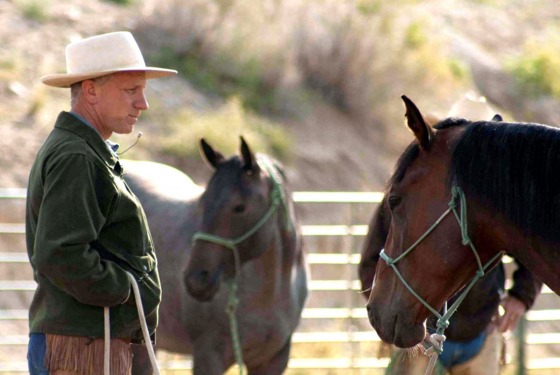
1) "Buck" is a pret'near perfect picture. You have your likable hero, Buck Brannaman, a wounded soul who overcame an abusive childhood and personal weaknesses to forge a better path in training horses. His experience taught him to be an empathetic, intuitive reader of horses and people. The thing that really stands out in this film is its humanity. Through working with their horses, the owners are transformed. They learn to let go of trying to force their will on others. “If you find a way to fit this thing right here, it'll make you better. It'll make you better in areas you didn't think related to horses.”

Movie blessings!
Jana Segal

*SCROLL DOWN FOR LONGER REVIEWS OF THESE MOVIES BELOW.

Sunday, April 01, 2012

Jana's Guilty Pleasure - "Midnight in Paris"


"Midnight in Paris" is Woody Allen's love letter to Paris. For me it's total wish full-filling escapism. I can watch it over and over just to be in Paris during artistic Renaissance of the 20s and hang out with the visionary artists of the time. It is the story of Gil, a Hollywood screenwriter, (Owen Wilson in the Woody Allen role) who joins his fiancee (Rachel McAdams) and her family on a business trip to Paris. Being in the "City of Lights" rekindles his dream of living in Paris while he writes his novel. Unfortunately, his fiancee and her parents have more lucrative plans for him. In an effort to escape the ensuing conflict, Gil takes a midnight walk and ends up in 1920's Paris. This is a dream come true for the aspiring novelist as he mingles with great artists (Picasso!) and his literary idols including Hemingway himself! His heroes become his peers and even give him advice as he pursues the enchanting young model who eventually becomes his muse.

It is unusual for such a lite-weight romantic comedy to win an Oscar for Best Original screenplay. But, "Midnight in Paris," is highly original.  The action shifts effortlessly back and forth between two time periods. That takes real writing chops. At least Allen has placed his alter ego in a fresh new setting.  In fact, this is one of the most enjoyable Woody Allen films to come out in years.

Have you ever had the feeling that you were stepping back in time as you strolled down a narrow cobble stone street or visited the old haunts of a favorite writer? Then, "Midnight in Paris," should delight the romantic in you and maybe even inspire you to follow your true passion.

Movie Blessings!
Jana Segal
www.reelinspiration.blogspot.com


Saturday, March 31, 2012

"The Artist" Reinvents Silent Pictures

O.K. I didn't want to like "The Artist." I've had it up to here with Hollywood remakes. Even Broadway is adapting Hollywood blockbusters for the stage. Is there an original idea out there! At the last Screenwriting Expo, more than one manager insisted that to break into the biz, you should take an old story and put a new twist on it. And to be honest, it worked reasonably well for the Cinderella remake, "Enchanted." (Though the over the top Alladin climax was a mess.)

So I should be morally opposed to, "The Artist," because it puts two old stories together – the over done, "A Star is Born" and "Singing in the Rain." Bigger-than-life movie star George Valentin (Best Actor Oscar winner Jean Dujarin) fades into oblivion with the decline of silent pictures as his young love interest, Peppy Miller, (the lovely Bérénice Bejohe) rises to stardom with the talkies.

French director (Best Director winner) Michel Hazanavicius chose to make a black and white silent picture. I'll admit here that I'm not a big fan of silent movies because I can't stand the fake, theatrical posturing and mugging. But, "The Artist" transcends the limitations of the silent form. Michel reinvents silent pictures by using a naturalistic acting style, exquisite cinematography, and modern storytelling devices such as opening with a silent film within a silent film. But what really makes it stand out are the clever, charming moments. In one touching moment, Peppy snuggles up to Valentin's jacket on the coat rack as if she is embracing the man. The actress is so totally invested in the hug that when Valentin catches her, he flashes a surprised, then amused grin that lights up his whole face. Sigh. Did I mention the incredible chemistry between these two charismatic actors?

A Facebook friend complained that Dujarin won best actor without uttering a word of dialogue. (Did he actually see the film?) But, as they taught us in Film 101, a movie is moving pictures. You should be able to understand the story with the sound turned off. Jean Dujarin, as George Valentin, goes through a full character arch from arrogance to falling in love to hitting rock bottom without the crutch of dialogue. And he kept me engaged in every scene. And he can tap dance! I'd say the Oscar was well deserved.

"The Artist" is more than a homage to the silent film era, it transcends the form. It presents a universal theme: When the old ways no longer work, ego may hinder us from adapting to the new ways, but in the end love conquers all.

It's not hard to see why it won Best Picture. You can see the love in every frame.

Movie blessings!
Jana Segal
www.reelinspiration.blogspot.com

Wednesday, March 28, 2012

"The Descendants"


There are times in our lives when our world comes crashing down and we are completely unprepared. Shocked and clueless, we grope around making awkward attempts to deal with the overwhelming situation or to just get by. Like the day my whole life was thrown out of whack when my husband of 23 years announced he wanted a divorce and moved out that afternoon. I did my share of groping to find my footing - not always handling it with the best of grace.

I guess that's why I relate to Alexander Payne's, “The Descendants.” Payne (and Oscar winning co-writers Nat Faxon and Jim Rash) aren't afraid to present a flawed main character, Matt King (George Clooney), who is absolutely clueless about how to handle the life shattering situation he finds himself in when his wife ends up in a coma as the result of a boating accident. To add insult to injury, he discovers that she was cheating on him at the time. It's a one-two punch that leaves him stunned and reeling.

Matt lives in Hawaii, in paradise, but has been so caught up in business transactions that he can't take in the beauty around him. His time has been spent negotiating deals with vacation resorts and condos to sell the pristine forest entrusted to him and the other descendants. This piece of land represents all that he has lost in his life. There was a time that he took his family on regular camping trips there. But he has lost his connection with the land and his family. He has become an absentee husband and father. In fact, he is absent from his own life.

Sometimes it takes a catastrophic event to shake us awake after sleep walking through life. (It took my husband leaving me...) Having been JOLTED awake, Matt is ill equipped to deal with the fall out from the accident on his two troubled daughters. George Clooney brings out the humor as his character gropes around trying to make some sense of the whole mess. When he hears that his wife was cheating, Matt, still in shock, charges off in his clumsy flip flops around a ridiculous circular drive – in search of answers, anything... Later, we can see the inner turmoil in his eyes even as his daughter splashes in the ocean and life goes on around him. Once he has dealt with his own issues, he is better equipped to help others cope with the tragedy. Finally fully awake, Matt sees that he is a part of something bigger than himself. He realizes his responsibility to the land, himself, and those around him. Procuring his place in the world puts his problems in perspective.

As for me, I'm grateful to be awake and learning life's lessons.

Movie blessings!
Jana Segal
www.reelinspiration.blogspot.com

Sunday, August 28, 2011

"The Help"


In the prelude, Abileen stoically tells an unseen interviewer that her grandmother was a house slave and her mother was a house maid. She, herself, has raised 17 white children. A naive voice asks if she ever thought of being something else. Her answer is the blank stare of resignation passed on from generations of subservience.

The movie proper starts with recent college grad Skitter (a wide eyed Emma Stone) being interviewed for her first newspaper job. Skitter is hired to write a housekeeping and cooking column – a subject she knows nothing about. No matter. While at a bridge club meeting, she asks her friend permission to interview her maid. Ironically, the maid, Abileen, is the only one she knows who keeps house. It becomes clear that her friend sees Abigail as her property when she catches Skitter affirming Abileen's contribution to the household. She tells Skitter that Abileen will be unable to continue working on the project.

Upset by her friend's mistreatment of Abileen and the unexplained absence of the beloved maid who raised her, Skitter is inspired to write a book on the maids' perspective of working for a white family. Her editor warns that she will never be able to get any maids willing to risk their jobs or their lives to talk to her. It is dangerous. It is 1960, the dawn of the civil rights movement. Jim Crow laws make it illegal to even print civil rights material. Tensions mount as a black activist is killed. The fear is palpable as black passengers are thrown off the bus near the murder sight and Abileen flees for her life past race riots.

This movie is about the shared delusion that blacks and whites in the South were separate. In 1960s Jaskson, Mississippi, Jim Crow laws and bridge club etiquette rule their lives. The laws were designed to separate the whites from the blacks, but black women had always worked very close to white families - preparing their food, cleaning their bathrooms, and changing their babies' diapers. For generations, the black “maids” raised the white children. Skitter explains to her publisher, “We are raised by our black maids. They love us and we love them, but they can't use the same bathroom.”

The setting is the domestic world of kitchens, nurseries and bathrooms which gives ample opportunities for kitchen (and bathroom) humor. On the whole, writer/director Tate Taylar does a good job balancing comedy and drama. The 146 minutes flies by with some laughs, tears, and dramatic tension. But sometimes the comedy goes a bit over the top. Hilly starts a petition initiating a law to have separate bathrooms for the help - even though her feisty maid, Minny, is the envy of the bridge club for her great cooking. This gives new meaning to the phrase, “Don't crap where you eat.”

There are multiple storylines. Care is given in showing the intertwining lives of the blacks and the whites. The writer seems to be saying both races are enslaved by the cultural restrictions of the time. Even Skitter's mother couldn't stand up to the bigots in her social club. She admits to Skitter, "Sometimes courage skips a generation." But it's the performances of Viola Davis as Abileen and Oscar winner Octavia Spencer as Minny that holds it all together. Davis adds gravity to every scene she is in. In Abileen's carriage we see the weight of generations of suppression as well as the personal risk she is taking with her involvement in the taboo book. Minny is different. After working for segregationist bridge club president Hilly, Minny has had enough. She is a fire cracker ready to explode. These women are survivors. But they have risen above that. They have stood up to their fears. They are heroes in their own civil rights protest and free women. I can't say so much for Hilly and her bridge club.

Movie blessings!
Jana Segal
www.reelinspiration.blogspot.com

Official site: http://thehelpmovie.com/us/

Tuesday, July 26, 2011

Most Inspiring Films 2010!


The movie year started off sloooowly. There were few Hollywood films that I wanted to watch, much less review. Luckily for me, I had the Loft Cinema where I could enjoy enchanting foreign films and documentaries. Ah, the docs! Is is amazing how documentaries have come into their own – even being screened in mainstream theaters – as entertaining (sometimes more entertaining) than their narrative counterparts. Generally, I don't review docs, but some of my favorite films of the past year happen to be docs so I'm including them on, “Jana's Favorite Inspiring Films of 2010” list. And as long as I'm breaking my self-imposed rules, I'll throw in a couple of wonderful animated films as well. Enjoy!

Honorable Mention: In the delicious Italian treat, "Mid-August Lunch" the unemployed fifty-ish bachelor Gianni (Gianni Di Gregorio) shows respect for his ninety-something mother by taking good care of her and lovingly preparing their meals. The landlord is willing to forgive their growing dept if they take in his mother so he can get away for the Mid-August holiday. He drops off his mother AND his aunt. Soon their doctor's mother joins the mix. So Gianni must survive the weekend playing good host to four strong-willed shut-ins. What impressed me most was how he never loses his manners but treats these woman with the respect earned by those who have reached a certain age. This film illustrates the isolation that comes with aging and our continued need to socialize. There is an Italian saying, "A tavola no s'invecchia," that articulates the theme perfectly, "The passage of time is suspended with experiencing the pleasure of good food, good wine and company."

12. “Four Lions” – There aren't that many comedies about terrorists. But “Four Lions” boldly turns a hilariously dark parody about extremist values into a moving tale about the innate cluelessness of the human-race.

11. “Toy Story 3” - A touching, nostalgic adventure for adults who remember what it's like to be kids - through the eyes of their toys. Won Best Animated Film of the year.

10.“Afghan Star” – a documentary on Afghan's version of American Idol. After being suppressed by 30 years of war and Taliban rule, the Afghan people are finally able to gather around the one TV in the village and enjoy their favorite show. A female contestant risks her life for a greater cause – to share with her fellow countrymen the expression of the human spirit through dance.

9. Sci-Fi Meets Immigration Debate in the award winning indie, “Sleep Dealer.” Director Alex Rivera sets his tale in a third world country and a big city. When their water is taken by international corporations, the local people are forced into hard labor to survive. The clever executives have invented a way to exploit their labor from afar so they don't even have to see the workers in their neighborhoods. The worker is connected to a machine where he becomes a puppet master, his arm movement controlling the arm of a robot at a distant construction sight. Even their private memories are bought and sold for mass entertainment. A truly original slant on immigration issues.

8. “The Fighter” – is one film I wish I had reviewed when it came out. I thoroughly enjoyed it, but the fighting world was just so familiar and common. It didn't feel original. When his older brother fails to become the champ, the weight of the family is shifted to Micky's (Mark Wahlberg) shoulders. His fighting career becomes the family business with his drug addicted brother (Christian Bale) as his trainer and his over-bearing mother (Best Supporting Actress Melissa Leo) acting as manager. Christian Bale (Best Supporting Actor) and Melissa Leo gave Oscar winning performances in this Best Picture nominated film about overcoming personal adversity and the bonds of family.

7. “Lebanon” - When this came out, it was one of the best movies I'd seen in a looong time. It showed the confusion and human tragedy of war from the claustrophobic view of a tank soldier.

6. “Don't Let Me Drown” -(I also didn't get a chance to write a review of Cruz Angeles' Sundance indie because I was busy watching more films at the AIFF.) Two young people are brought together by the 9/11 tragedy that touched both of their families in this refreshingly real love story. It is good to see normal Bronx teens for a change rather then the juvenile delinquents commonly portrayed in movies. The filmmaker takes his time setting up their world so the audience becomes invested in what happens to these kids in this moving, touchingly funny coming of age film. The naturalistic acting enhances the experience.

5. “How to Train Your Dragon” – Spectacular scenery, thrilling flight and combat scenes. An inspiring tale of how one person can lead the way to positive change when the old ways don't work anymore.

4. “The King's Speech” - England is on the verge of the second World War and the newly appointed King (Colin Firth) must give a speech rallying the country. But before he can speak for the people, he must manage his own debilitating stammer. His Majesty must overcome his mistrust of his therapist (Geoffrey Rush) and grow to trust that he is the powerful leader the country needs. This story is about more than making "The King's Speech." It is about the making of a King. I recommend this Best Picture winner for it's clever writing and inspiring story, Colin's Firth's dynamic, Oscar winning performance and Geoffrey Rush's hilarious take on the eccentric therapist.

3. “Winter's Bone” – my favorite for Best Picture. When her father disappears after putting the family house and farm up for bail, sixteen year old Ree (Jennifer Lawrence) must traverse the dangerous backwoods of the Ozarks to bring him back. “Winter's Bone” was filmed on location in the Ozarks giving it an authentic feel by using their music, language, and customs. Writer/director Debra Granik and writer Anne Rosellini gave us a strong teenage heroine who showed loyalty, determination and strength as she did what had to be done to protect her young siblings and taught them the necessary survival skills in case she failed.

2. From the trailer, “Big River Man" appears to be a entertaining character study of an overweight Slovenian endurance swimmer in his fifties who drinks two bottles of red wine a day even when swimming. In 2007 Martin Strel began an insane attempt to be the first person to swim the entire length of the world's most dangerous river, the Amazon, supposedly to create an awareness of our polluted rivers. But his real driving force seems to be the pursuit of fame. When the river starts affecting his physical and mental health, we see that something else is driving him – a mystical quest for unity and mastery over nature. Don't let the trailer fool you. This is one of the most compelling, moving docs ever. Hilarious, disturbing, powerful.

1. My favorite film of the year was, “Even the Rain.” I was so moved by this picture that I stayed for a second screening. A production crew has come to Bolivia to shoot the story of how Columbus conquered the new world by suppressing and enslaving the indigenous people. Ironically, the crew is there to get cheap labor by exploiting the indigenous people to work as extras for $2 a day (and also have them build the sets). So they are actually exploiting the descendants of the very people the Spaniards exploited. During the filming, Spanish decedents are still suppressing the indigenous people by taking their most precious resource – their water supply. The director unknowingly casts a charismatic, outspoken local to play one of the natives - who turns out to be the leader of the water protests. As a filmmaker, I was inspired by the attention to detail that the fictional as well as the real director, Icíar Bollaín, gave to the Spanish and Inca history. And I find it admirable that despite having the scope and feel of a Hollywood epic, director Bollaín chose to tell this story in Spanish – accentuating Spanish responsibility in suppressing the Incas. Whew! I love this film!

Perusing this list, I can see that 2010 was great year for film.

Movie Blessings from 2010!

Jana Segal
www.reelinspiration.blogspot.com