Sunday, July 25, 2010

"Cyrus" and "Winter's Bone" The Ties that Bind


"Winter's Bone" and "Cyrus" are two very different films about the bonds of family.

Director Debra Granik 
In "Winter's Bone,"17 year-old Ree Dolly (Oscar nominated Jennifer Lawrence) is bound by family responsibility. When her daddy goes missing, Ree must take care of her siblings and her mentally ill mother. She has an innate gift for parenting. She teaches the youngins' how to survive in a way they can understand and they show her due respect. But she soon finds that she is way over her head when the sheriff comes by to inform them that they are about to lose their house and farm because Pa put it up for his bail bond, then disappeared. Danger mounts as she is forced to defy her deadly clan's code of silence to find her Pa and bring him home. In authentic "slice of life" style, the filmmaker (Debra Granik) gives us a rare glimpse of the gritty mountain people, customs, and code of conduct of the Ozarks. You can just feel the sticks cracking under Ree's feet as she traverses the backwoods country and tastes the squirrel meat. "Winter's Bone" is about family ties that bind and gag; and finding the strength to survive in the hardest times.

"Cyrus," explores the bond between a mother and son and how much bonding is healthy. John's ex-wife (Catherine Keener) tells him she's getting married then proceeds to invite him to a party to meet other women. John (John Reilly) gets totally sloshed at the party, yet miraculously manages to pick up the most understanding woman, Molly, (the vivacious Marisa Tomei) with his clumsy attempt at honesty. John can't help but be drawn to Molly's kind heart. The relationship gets off to a great start. Then John meets Molly's 21 year-old, home-schooled, new age musician son, Cyrus (Jonas Hill). Suffice it to say that it is a very close family. Single mom Molly is so protective of her boy that she can't see the battle he is waging with John over her affections. "Cryus," has a different tone than most comedies. It is quirky and original, yet it somehow feels real. "Cyrus," is about the ties that blind, eh, bind between mother and son; and whether a mere man should get between them. Can love win out in the end?

It is more than the theme that binds this thriller and comedy. They also share truly original, honest writing and great performances. These are two of the best films I've seen for a while.

Movie blessings!
Jana Segal
www.reelinspiration.blogspot.com

Wednesday, July 07, 2010

"Mother and Child"

"Mother and Child" is a drama about three women connected by their roles in an adoption. Adoption has had a deep impact on each of their lives.

Karen (Annette Bening) is a bitter, fifty-year-old, health care professional who takes care of her distant, defeatist mother. Karen has never gotten over the loss of the baby girl that her mother forced her give up when she was a teen. She writes letters to the daughter she never knew. She is jealous of any attention her mother gives their housekeeper and her little girl. The girl is a painful reminder of what she has lost. Karen's heart has been closed off for so long that she doesn't know how to respond to the attention from the new physical therapist (Jimmy Smits) at work. Her mother encourages her to be careful so she doesn't "fall" again.


Elizabeth (Naomi Watts) was adopted by an uncaring couple. Shrouded in protective armor, she has grown up to be a cold, steely lawyer in complete control of her life. When she is hired at a new firm, she uses sex to control her bewildered, delighted boss and keep him at safe distance.

Lucy, (Kerry Washington) a successful baker and loving wife, has failed to conceive with her husband. She is bound and determined to adopt a baby - even if that includes anxiously jumping through the hoops created by the baby's birth mother (Shareeka Epps) or raising a child on her own.

This film shows the filial longing and feeling of loss caused by breaking the natural bond between mother and child: how the child doesn't feel complete without her mother and the mother feels that a part of her is missing. There is a deep seated emptiness. The wounds are passed down from generation to generation. These women must find the strength to open their hearts in order to end the cycle of loss.

Motherhood is hard even with the support of a traditional family. Some young women can't find the strength to meet that challenge alone. They make the difficult decision to give their baby up for adoption - in hopes that it will have a better life. This film suggests that the struggles of single motherhood may be less traumatic then severing the maternal bond.

What makes this film special are some painfully authentic scenes. While there are some TVmovie-like conversations about the trials of adoption, there are also silent moments where the action does the talking. It is in these silences that the audience ponders the meaning. In a sense, the experience is enhanced by what the audience brings to it - their memories and experiences allow them to relate. It is those silences that make this a powerful work that leaves you thinking as the credits roll.

Of course, there are some viewers who will not relate to this at all - some will be offended by the inherit subtext that adoption is an unnatural state. Some may complain that the fathers are conspicuously absent. Indeed, the male characters are relegated to supporting roles in the world of, "Mother and Child."

This is film for single mothers who made the difficult decision to put their baby up for adoption, the children they lost, and the people who love them.

Movie blessings!
Jana Segal
www.reelinspiration.blogspot.com

Wednesday, June 30, 2010

"La Mission"


"La Mission" is a project of love about the barrio neighborhood the Bratt brothers grew up in. Writer/Director Peter Bratt takes time and care to set up a strong sense of cultural pride with Aztec dancers, Catholic rituals, "slow and low" cruising in shiny low riders through the family oriented Mission District of San Francisco.

Che Rivera, (Benjamin Bratt) an ex-con and recovering alcoholic, has worked hard to earn the respect of his community by going straight and being a good father to his college bound son (Jeremy Ray Valdez.) Benjamin Bratt portrays Che as the embodiment of Mexican machismo. The director presents him as a sympathetic character who was brought up to use his fists to survive on the hard streets. Che finds strength for his quest for redemption in his culture and religion. But when he discovers that his beloved son is gay, that homophobic culture drives his negative response. Everything he knows is thrown out of whack.

Enhancing the theme is a multi-racial relationship with Che's black, culturally diverse, social-worker neighbor Lena (Erika Alexander.) Lena sees through Che's violent, macho exterior. Experience has taught her that this kind of man is incapable of changing, but she can't help but be moved by the wounded boy inside. When it becomes clear that he is a man who "uses violence and intimidation" to get what he wants, she ends their relationship - forcing him to take a good look at himself.

Near the end of the film, there is an odd visual metaphor which I believe is meant to show the contrast between past and present Chicano culture: colorful Aztec dancers perform at the shine of a murdered gang member with a sign, "No more violence." I found it odd because the Aztec's practiced human sacrifice, right? Whether intentional or not, the Aztec dancers are a good metaphor for the theme: We need to keep what is healthy from our culture or religion and let go of what is destructive.

"La Mission," isn't perfect. A few scenes were just left hanging - especially in the romantic subplot. I didn't feel the chemistry between Che and Lena. But Benjamin Bratt delivers one of his strongest performances. The brothers have given us an authentic, loving depiction of the culture in the Mission barrio with an important theme for our times.

Movie blessings!
Jana Segal
www.reelinspiration.blogspot.com

Wednesday, June 23, 2010

"Mid-August Lunch"

The cliche of the Italian bachelor living at home with a doting mother who waits on him and prepares his favorite meals is turned on it's head in the delicious Italian treat, "Mid-August Lunch." In this film, unemployed fifty-ish bachelor Gianni (Gianni Di Gregorio) shows respect for his ninety-something mother by taking good care of her and lovingly preparing their meals.


The small family has been living off of credit for some time and is months behind on their maintenance and electric bills for their ancient apartment. The landlord is willing to forgive the dept if they take in his mother so he can get away for the Mid-August holiday. The landlord drops off his mother AND his aunt. And soon the doctor's mother joins the mix. So Gianni must survive the weekend playing good host to four strong-willed shut-ins. What impressed me most was how he never loses his manners but treats these woman with the respect earned by those who have reached a certain age.

This is a film about the joys of entertaining. It illustrates the isolation that comes with aging and our continued need to socialize. There is an Italian saying, "A tavola no s'invecchia," that articulates the theme perfectly, "The passage of time is suspended with experiencing the pleasure of good food, good wine and company."

"Mid-August Lunch" dishes up "slice of life" humor with simple, authentic Italian flavors like those in the perch with potatoes, oregano and rosemary lovingly served at the holiday feast.

Movie blessings!
Jana Segal
www.reelinspiration.blogspot.com


Wednesday, May 19, 2010

What's Really Happening on the Arizona/Mexican Border

After reading my recommendation of the doc, "389 Miles: Living the Border," a Myspace friend wrote that she wished people in the Northeast could actually know what's going on along the border.

Her question really weighed on my heart, so I spoke to a friend of the Douglas rancher who was killed. She told me that the police now know that it was drug smugglers who killed the rancher. She is angry because the newspaper accounts pointed to illegal immigrants crossing the border. She confirmed that things are horrific on the border. The drug smugglers and human traffickers are ruthless murderers. Much of what is happening isn't covered on the news - for instance little girls are being abducted from their homes. The smugglers have gotten cocky and bold and will shoot anyone that gets in their way - even policemen. The ranchers in the area are requesting military intervention. These ranchers are rightfully outraged. They want to shoot anyone who comes on their property.

But I want to make something clear - all "illegals" are not the violent criminals. The media is equating the word "illegal" or "illegal immigrant" with violent criminals. Not everyone who is crossing the border is a drug smuggler, kidnapper, or home invader. Most are migrant workers risking their lives to work for a better life for their families. Some of these migrant workers are even kidnapped and held for ransom or sold into human slavery. They are the victims. You might say that they should stay in Mexico. Imagine how bad things must be at home for these people to risk their lives crossing our brutally hot desert. And now it has become nearly impossible to get papers to come here legally.

Recently, a facebook friend posted a Fox news story on the Mexican crime wave spreading to Arizona. It was clearly edited to illicit fear. There were shots of: huge stacks of cocaine, members of the Mexican drug cartel shooting each other, dead bodies, kidnapping innocent civilians and a full out military attack on the smugglers. Then they showed shots of the violence spreading to Arizona: shots of migrant workers being kidnapped, and even a reenactment of a home invasion in Phoenix. Scary stuff. But the scariest part was that some FB friends couldn't distinguish from migrant workers and the home-invaders. One FB friend asked, "How do we tell the difference?"

This is not the first time the media has broadcast stories to create fear of illegals. The documentary,"Immigrant Nation," shows President Bush's efforts for immigration reform derailed by his own party. The Republican party used the media to create fear of illegal immigrants to get people to vote Republican. The news covered every crime they could find done by illegals including a drunk driver hitting an American. They created fear anyway they could - even reporting rumors of diseases being brought into our country by illegals.

I've lived in Tucson, Arizona for 15 years. I've seen undocumented immigrants in low income jobs like dish-washing and housecleaning or physically demanding outdoor work like landscaping, construction, and roofing. I don't know how they work out in hot Arizona sun. I wouldn't want to do it.

The undocumented workers I see are living in trailers, raising families, and working hard to send home money to their families in Mexico. I know a young woman who nearly died in the desert when she injured her foot. Luckily, a friend found her a walking stick which saved her life. Now that she knows the dangers, she says that she wouldn't cross the desert again. She came here to find work so she could help her family in a small Mexican town where there are only a few low paying jobs. Even when she found work, all her family could afford was tortillas and beans. I asked her why she didn't wait to come here legally and she said it costs so much and takes ten years (if you are accepted.)

This is a complicated issue. That is why documentaries like "389 Miles: Living the Border" (link to full movie) are so important. Tucson Filmmaker Luiscarlos Davis, who lived on the border city of Nogales, traveled the length of the border to capture stories that put a human face on this issue.

Recognizing a pressing need, Luiscarlos is presenting his documentary around Arizona to create more understanding during these difficult transitional times. He has agreed to do free screenings; but because the film doesn't have distribution yet he must present the film himself. This is great because he has a personal connection with the issue that he can share. Please, consider arranging for a screening for your club, organization or church NOW.

Movie blessings!
Jana Segal

(Note: The host usually pays for the filmmakers' travel expenses and may make a donation towards the costs of preparing the film for distribution so even more people can see this powerful film.)

To arrange for a screening, e-mail the filmmaker Luiscarlos at: email@389miles.com

Friday, May 07, 2010

Reel Inspiration: About Films of Substance.

You may have noticed that I haven't written a review for a while. I've seen plenty of films but few have inspired a review. (Sundance winner, "Don't Let Me Drown," that screened at the AIFF, warranted a great review but I only had time to send out a quick summary.) Even the Oscar nominated films I saw were lightweight in regards to theme.

I considered writing a review of "Crazy Heart." I thoroughly enjoyed Jeff Bridges lived-in performance of the seedy, alcoholic, has-been Western singer Bad Blake as well as his musical performance (which earned him a well-deserved Oscar nod.) But, for me, there was something missing from this redemption story. When Bad finally decides to go to rehab, his father says something to effect that it won't be easy. Aside from a scene where his young girlfriend refuses take him back, it's damn easy. No difficult introspection going on here.

After seeing the trailer of, "The Last Station" I looked forward to reviewing this historic epic about the last turbulent days of Russian novelist Leo Tolstoy with his wife Countess Sofya . (Tolstoy's novels "War and Peace" and "Anna Karenina" sparked the Tolstoyism movement.) One reviewer called "The Last Station" a romantic comedy, a romantic romp! Considering the subject, I hoped for something more. I found the feuding between Tolstoy and his aristocratic, drama-queen wife entertaining. (Helen Mirren deserved an Oscar for her role.) But I learned very little about Tolstoyism movement - just that they opposed private property (while Tolstoy owned a huge estate) and advocated sexual abstinence (while Tolstoy and Sofya had numerous children.) The main focus of the story is about who should get the rights to his novels after Tolstoy's death - his wife and muse Sofya or the Russian people. This plot line becomes repetitious, then tedious. But I enjoyed the pretty scenery and pretty love making (ironically!)

"The Last Station" and "Crazy Heart" are now playing at Crossroads Cinema. I would definitely recommend them for their Oscar caliber performances and entertainment value.


Of all the films I watched, the one with the most depth and importance was a sixty-minute documentary called, "389 Miles: Living the Border" by Tucson filmmaker Luiscarlos Davis. I generally don't review documentaries, but I am making an exception because this film is so relevant to the issues of our times. Luiscarlos, who grew up in the border city of Nogales, travels the length of the border to find the true and sometimes tragic stories. I was so moved by this film, that I immediately went on facebook and urged my friends to organize screenings to spread more understanding of border issues and the trials facing migrant workers.

Recognizing a pressing need, Luiscarlos is presenting his documentary around Arizona to create more understanding during these difficult transitional times. He has agreed to do free screenings; but because the film doesn't have distribution yet he must present the film himself. This is great because he has a personal connection with the issue that he can share. Please, consider arranging for a screening for your club, organization or church NOW.

Movie blessings!
Jana Segal

(Note: The host usually pays for the filmmakers' travel expenses and may make a donation towards the costs of preparing the film for distribution so even more people can see this powerful film.)

To arrange for a screening, e-mail the filmmaker Luiscarlos at: email@389miles.com

Watch the trailer:
http://www.youtube.com/watch?v=k0kvjJXKYGs

Wednesday, March 03, 2010

"ME AND ORSON WELLES"

By guest reviewer Robin Farmer

Based on Robert Kaplow's novel of the same name, “Me and Orson Welles” is a coming of age story unfolding during the course of one week in 1937. It stars Zac Efron, the Disney tween idol who shows his acting chops as a teen on the cusp of manhood who grows up fast.

A daydreamer in school, the aspiring actor lucks into a role as Lucius in Orson Welles’ (played by newcomer Christian McKay) ambitious theatrical debut of  “Julius Caesar.” He does an admirable job with the role of Richard, a young man with one foot in high school and the other in the gritty world.

Efron proves he’s more than a pretty face who can sing and dance. He holds his own in scenes with McKay, no small feat.

McKay delivers a delicious performance as the larger-than-life Welles. He’s charming yet devilish, a dandy and a rogue who is big on intellect yet small of heart. He’s electrifying on screen, imbuing his scenes with memorable lines and often mischievous twinkling eyes. He’s maddening yet adorable as the young visionary behind his legendary Mercury Theatre Company.

Themes of lost innocence, the price of success and the grayness of truth are explored. Sexual situations make some of the messages inappropriate for Efron’s legions of young fans. But in our fame obsessed culture, it’s refreshing when a script examines aspirations and morals from a high school student’s perspective.

The film deftly captures the frustrations and delights of the theatre. The clashing personalities off the stage, the endless rehearsals, the second-rate treatment for non-stars.

At the center of it all is a mesmerizing McKay in this semi-historical period piece shaped by a smart script and direction.

But the narrative belongs to Richard, who will fall for the worldly Sonja (Clair Danes) and clash with the egotistical Welles. Both teach him some life lessons no classroom or script can.


Thursday, February 11, 2010

"Where the Wild Things Are"


This year I only posted movies I had personally seen on Reel Inspiration's Most Inspiring films poll. Unfortunately, because of the mixed reviews, I didn't watch, "Where the Wild Things Are" so it isn't on the list.

Reel Inspiration reviewer Josh Valentine wrote, " I would really like to be able to vote for "Where The Wild Things Are," it was the most transcendentally uplifting and inspirational film of the year for me!" Here is Josh's review - better late than never...

WHERE THE WILD THINGS ARE

BY GUEST REVIEWER JOSH VALENTINE
Indiebum

A film that permeates the mind, and allows one to discover their inner child in a way you’d never expect. The attainment of innocence and one’s inner child is impossible to exact in a completely genuine way – but one single viewing of Spike Jonze’s adaptation of Maurice Sendak’s book will transport its viewer (if not for a single night) to a place they’d wholly forgotten. The tragic loneliness of childhood – the inability to let out one’s deep emotional pains because you lack the education to iterate it through metaphor – is portrayed, something I’ve never seen in the medium. The innocent intelligence of a child’s mind which only exists within that mind is actually achieved in Jonze’s brilliant script and through the performance of Max Records. And that’s only the first fifteen minutes. Sendak’s original book was relatively thin in terms of characterization, but it spoke loudly in terms of the explosive potential of a child’s imagination. Jonze and screenwriter Dave Eggers name and explore the actual wild things, utilizing each beast’s personality as a reflection of the complexities of a child. The voice work is phenomenal (watch the film, then check IMDb and be amazed at who played certain characters) as is Karen O and Carter Burwell’s inspired score – the best in terms of cinematic relevance since Jon Brion’s score or “Eternal Sunshine of the Spotless Mind.” While the film has become something of a hipster’s wet dream, it should not be ignored as it is artistically important and singular in a new genre of film – the inner child’s film.

Just for fun:
Where the Wild Things," video adaptation of the Maurcie Sendak classic.

Sunday, January 24, 2010

MOST INSPIRING FILMS 2009!


This list is compiled of films that have been promoted through our reviews on Reel Inspiration's blogs. Diverse films with entertaining, powerful stories that uplift, challenge, give hope or inspire. Some weight has been given to films with themes that are particularly relevant to the issues of our time.

Due to time restraints, I must limit the kind of films I review. For instance, I don't review documentaries and I rarely review animated films. I am less likely to review a Hollywood blockbuster unless I am EXTREMELY moved as with last year's MICHAEL CLAYTON. In fact, I mostly review films that move me emotionally or intellectually.

I would like to make an exception about documentaries by recommending two of the most inspiring films of the year: "THE HORSE BOY" and "AFGHAN STAR." In both of these docs, the heroes take great risks to follow their "unreasonable" paths. In THE HORSE BOY, an autistic boy speaks clearly when put on a horse. His family travels across Mongolia in search of a horse Shaman to heal the boy. http://www.horseboymovie.com/Film.php
In AFGHAN STAR, an Afghani woman risks her life to express herself in song and dance on the national talent show. www.afghanstardocumentary.com/

If you do not see your favorite inspiring films represented here, please, share them in the COMMENT section.

After reviewing this list, I found a trend in the many of the films: the theme of the importance of human connections. Perhaps in this time of war and financial hardships, our connections with others are even more important.

It is my pleasure to present...
Reel Inspiration's MOST INSPIRING FILMS 200
9.

1) "Up in the Air"
Ryan Bigham, an elite frequent flyer, enjoys riding high above the clueless employees he fires as a corporate hatchet man. He discovers that despite the hassles, it's our connections with others that make our lives rewarding. This film stands out as one of the few recent adult comedies that is truly witty.

2) "Paris"
In a city bustling with people and their busy lives, it's time to start living by connecting with others. This touching film brims with hope and life. (subtitles)

3) "Invictus"
Newly elected President Mandela sets an example for his country by forgiving and working along side of his vicious suppressors. He uses the universal language of sports to present a unified Africa to the world. Truly inspiring.

4) "Departures"
When his dream of being a cellist is destroyed, Diago finds his true path in the most unlikely of professions - preparing the recently departed with the traditional Japanese cleansing rituals of Nokanshi. DEPARTURES has humorous scenes reminiscent of SUNSHINE CLEANING, but it takes us on a deeper spiritual journey. (subtitles) "Departures" won best Foreign Language Film.

5) "Precious"
This powerful, acclaimed film with heart achingly honest performances, demonstrates the strength of the human spirit to survive extreme abuse and find hope. It shows the transforming power of having one person - a teacher - who believes in you. "Precious" won best Supporting Actress for Mo'Nique and Best Adapted Screenplay for Geoffrey Fletcher. 

6) "Tulpan"
Cinematic magic. This "fictional" film follows the daily life of a nomad family, but it feels more real and less intrusive than a documentary. Spontaneous acts of nature are caught on film and seamlessly incorporated into the story. It ruminates on how modern civilization encroaches on the happiness of a simple life. (subtitles)

7) "Rachel Getting Married"
Troubled Kim is released from rehab to attend her sister's wedding. Desperate to reconnect, she makes clumsy attempts to get her family's attention. But the hardest part is coming home to the people you hurt. Despite it's flaws, Kim learns that being a part of the family is worth the effort. This film is full of the painful truth, but there is also the hope of forgiveness.

8) "Sugar"
Sugar becomes a local hero in his small town in the Dominican Republic when he is recruited to play minor league baseball in the United States. But his pursuit of the American Dream is hampered by his struggles with the language and the cultural barriers of acclimating. More than just a sports film, Sugar deals with the issues of being true to yourself in a foreign country and the struggles facing illegal immigrants. (subtitles)

9) "Moon"
2001: A SPACE ODYSSEY lite. This mostly two set, two actor production was one of the best Indie films of the year. Sam Bell has been stationed at the mostly automated lunar base for three years with his robotic assistant Gerty. His only human contact are recorded transmissions from his family back on earth. MOON illuminates what it is to be human: the necessity of hope and our need to connect with other people.

10) "The Messenger"
War "hero" Will Montgomery returns from Iraq and is assigned to the Army's casualty notification service. He has not gotten any grief counseling since receiving his own battle wounds - just a quick lesson in protocol from his jaded partner Tony who instructs the soldier to avoid physical contact with the next of kin. But their grief hits close to home. When he finds himself drawn to a widow with a brave facade, he questions his ability to be good for anything but war. THE MESSENGER shows the resiliency of the human spirit to move through grief to hope.

11) "Wendy and Lucy"
The antithesis of Disney talking animal films, WENDY AND LUCY shows the realistic bond between a young woman and her dog. Wendy relies on her dog Lucy for a sense of security and companionship as she travels to a fish cannery job in Alaska and sleeps in her car at night. When her car won't start in the morning, it is towed away leaving Wendy stranded in a town with no job opportunities and a hungry dog to feed. Wendy must deal with the hard responsibilities of having a pet.

Movie Blessings!
Jana Segal
Reel Inspiration

CHECK OUT COMPLETE REVIEWS BELOW.

Friday, January 22, 2010

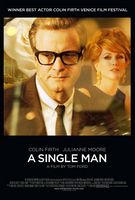
"A Single Man"


"You must get through this goddamn day."

With this affirmation George begins his day.

College professor George (Colin Firth) lives a tidy, orderly life of silent desperation since the death of his partner of sixteen years. Today George plans to put a tidy, orderly end to it all. He puts his affairs in order and packs his brief case for his last day of work - gun in tow.

"A Single Man," is a singularly beautiful film. Several reviewers have commented on how fashion icon-turned-director Tom Ford's use of style distracts from the film. But style and beauty are really the point. It's all about appearances.

Keeping up appearances was vital to a gay man in the early sixties. The restraints of society didn't allow men to express deep sentiments. George must contain his emotions even when he is told that his life partner has died in a car accident and that he isn't invited to the funeral because it's "only for the family." Actor Colin Firth gives us a glimpse of his pain while struggling to keep it at a socially acceptable level. Director Tom Ford cues us in on the depth of his feelings through music.

But today George has nothing to lose, so we see hints of his true sentiments. He lingers on the scent while petting a stranger's pup. He raves about the secretary's beauty. For the first time, he shares his thoughts with his students about how people are afraid of those who are invisible to them - like the Jews. George is invisible in his own life. But he is still too guarded to share that with his students.

I'm afraid Tom Ford made George a bit too guarded. I think I would have felt more for George if I had seen a deeper connection between George and his lover. But George's memories are shallow. That's really a shame because this is a film about the importance of human connections. Throughout the film, I hoped that George would find the connection he needed to make life worth living.

"A Single Man," is a deep film about appearances and our need for connection. It is an important film because it is still sadly relevant. Hopefully, it will help us connect with the beauty in all of us.

Movie blessings,
Jana Segal
www.reelinspiration.blogspot.com

Sunday, January 10, 2010

"Up in the Air"


ZIP up the carry-on bag, SNAP up the handle, ROLL up to the gate, and V.I.P. through the automatic check-in machine. ZIP. SNAP. ROLL. VIP. "It's a pleasure to see you again Mr. Bingham." In V.I.P. time, Ryan Bingham is "Up in the Air."


This is the structured, comfortable life of Corporate Downsizing Expert and elite frequent flyer Ryan Bingham (brilliantly played by George Clooney.) Bingham happily travels 322 days a year. He is on the verge of achieving his ultimate goal - to win a golden card for earning ten million frequent flyer hours. And he has just met the frequent flyer woman of his dreams, Alex Goran (Vera Farmiga) - a sexually adventurous woman with no excess baggage.

After watching his motivational speech in the trailer, I was in no hurry to see the film. (I'll edit it here for brevity.) "Imagine that you're carrying a back pack...Pack it with all the stuff in your life...How much does your life weigh?...Now fill it with people...Feel the weight of that bag. Make no mistake, your relationships are the heaviest components in your life." What has become of our country when a Corporate Downsizing Expert is considered a motivational speaker?! Our hero is a successful jerk who can't be bothered with people.


I opted for another movie on Christmas Day, but I couldn't help noticing that "Up in the Air" was sold out. Later, I looked it up on-line and found out that it was popping up on some best films lists. What did these people know that I didn't? Was it George Clooney's smile?

I saw it the next day. I was delighted to discover that "Up in the Air" was a charming, witty, and ultimately poignant film in the tradition of Prestin Sturge's smart comedies. Kudos to director/co-writer Jason Reitman ("Juno," "Thank You for Smoking"), co-writer Sheldon Turner, and an award winning ensemble cast.

Bingham flies from city to city firing unsuspecting corporate employees. He handles his job with the necessary objectivity while treating his victims with as much dignity as he can muster. He gives them a package that includes their severance benefits and a plan for reclaiming their unrealized dreams. No doubt it is a great comfort to get "up and away" from it all.

Bingham is in danger of being grounded when an Ivy League graduate Natalie Keener (Anna Kendrick) develops a plan to save travel costs by firing people via video conferencing. Bingham's comfortable routine is challenged when he is forced to take Natalie on the road to show her the ropes. She observes, "You have set up a way of life that makes it impossible for you to have any kind of human connection." I found myself rooting for this self-centered man to finally grow and learn how to connect with other people.

"Up in the Air" reminds us that in these difficult times, we need to come down to earth and find strength in our connections with others. One thumb way "Up in the Air."

Movie blessings!
Jana Segal
www.reelinspiration.blogspot.com

Sunday, January 03, 2010

Hollywood blind-sided by the "Blind Side"


"The Blind Side" is the true story about how a huge, homeless teen Michael Oher (Quinton Aaron) was taken off of the mean streets of Memphis and into the home of Leigh Anne Tuohy (Sandra Bullock). With the help and encouragement his new family, he works hard to earn an education and eventually becomes an offensive lineman for the Baltimore Ravens.

I wonder if Hollywood executives were at all blind-sided when this little movie opened at $34,119,332. Chances are that it wouldn't have been made if it wasn't based on a successful book. It has TV movie written all over it. But it has grossed $209,052,000 to date. I'm sure credit was given to Sandra Bullock who starred in the hit comedy, "The Proposal," earlier this year. Sandra Bullocks ability to open a film aside, I believe there is another reason that this film is such a huge success. Despite our initial cynicism, we are actually inspired by people who unselfishly give of themselves. Theater goers have sent a message to Hollywood with their entertainment dollars. We are hungry for uplifting stories of human kindness. I hope Hollywood listens...

The movie, based on the true story, shows human compassion, strength and the inner beauty with fearlessness that each human has the potential of being. Loved it. -- Jennifer Hillman

"The Blind Side" is a must see movie. Sandra Bullock gives a stellar performance along with a fabulous cast. This film will inspire and encourage you to invest into the lives of those who are less fortunate and who need an opportunity to succeed in life. -- Susanna Velaquez

I went to see this movie by myself over the holidays and I can't stop talking about it. Because of the movie it has inspired me to be "My Brothers Keeper" I gave my son $25.00 to go see the movie last weekend:) I HOPE he did! -- Candy Kennelly

I loved it because it shows no matter what our differences are (racial, gender or economic), we still need love, support and guidance from people who really care. If each one saves one in the world, all of us would be much better off. A family is not only a husband, wife and kids. It is about a group of people caring for one another. This movie was wonderfully uplifting.-- Ralette

Movie blessings!
Jana Segal
www.reelinspiration.blogspot.com

Saturday, January 02, 2010

"PRECIOUS" and "THE MESSENGER"


From Despair to Hope

Two powerful, acclaimed films, "Precious," and, "The Messenger," have heart-achingly honest performances that express the strength of the human spirit to move through despair to hope.

The synopsis of, "Precious," couldn't be more depressing. Precious, (Gabourey "Gabby" Sidibe) an obese thirteen year old, is pregnant for the second time with her father's child. Her mother (Mo'Nique) treats her as less than a servant, beating her and constantly reminding her that she is nothing. We get a glimpse of the girl's spirit as Precious escapes into her dreams of being a glamorous star. At school Precious is pretty much invisible aside from being teased for her weight. But there is one teacher who recognizes her potential in math. When Precious is kicked out of school, he recommends that she be placed in a alternative school. Her new teacher (Paula Patton) asks Precious how she felt about introducing herself to the class and Precious says she feels, "Here." The teacher assigns her a journal where she expresses herself for the first time. Precious finds the strength to get an education and keep her baby even as the abuse intensifies at home.

It is a minor miracle and a credit to director Lee Daniels, screenwriter Geoffrey Fletcher, and actress Gabby Sidibe that you leave the theater actually feeling hopeful. The film demonstrates the transforming power of having one person - in this case a teacher - who believes in you. Precious illustrates the strength of the human spirit to survive extreme abuse and find hope.

In, "In the Messenger," war "hero" Will Montgomery (Ben Foster) returns from Iraq and is assigned to the Army's casualty notification service. He has not gotten any grief counseling since receiving his own battle wounds - just a quick lesson in protocol from his jaded partner Tony Stone (Woody Harrelson) who instructs the soldier to avoid physical contact or hugging the N.O.K. (next of kin.) Ben assures him, "I'm not going to be offering any hugs."

Will has come home to a lonely apartment and an empty life. (When he went off to war he broke up with his girlfriend.) He diligently carries out his duty, but the grief of the families of the deceased hits close to home. He finds himself drawn to a widow with a brave facade. Her husband's story brings out his own neglected issues. Will his "war scars" heal so he can be a decent husband and father? Or should he reenlist because war is the only thing he is still good for? Somehow he finds the strength to choose life. "The Messenger," shows the resiliency of the human spirit to move through grief to hope.

Movie blessings!
Jana Segal
www.reelinspiration.blogspot.com

OSCAR ALERT:

Mo'Nique won Best Supporting Actress, Geoffrey Fletcher won Best Adapted Screenplay

Monday, December 28, 2009

"Invictus"


"Invictus," opens with the image of a road dividing the well groomed, green rugby field for the white African team and the rough, dirt lot where black African children play. Coming down the road is the motorcade of newly elected President Nelson Mandela.

This is a movie about inspiration. President Mandela's (Morgan Freeman) resolve to unite the nation without punishing his suppressors after serving twenty-seven years as a political prisoner is indeed inspiring. Through his example, he teaches his country how to forgive.

Knowing that his county is still racially divided in the wake of apartheid, the President enlists the help of the national rugby Team Captain (Matt Damon in his most buff and tan) to unite the country with the universal language of sports. Africa is hosting the Rugby World Cup Championship and he knows that the eyes of the world are on them. His first task is to inspire the team to overcome their losing streak and win the championship. But the bigger challenge is to inspire his hostile countrymen to rally around the mostly white team.

Unfortunately, the sports section of the movie isn't as moving as it could have been and therefore less inspiring. President Mandela gives the Team Captain the poem, "Invictus" for inspiration. (Mandela got strength from this poem to survive those hard years in prison.) The Team Captain surprises his players with a visit to Mandela's tiny prison cell. But an opportunity is lost when he doesn't share the poem with his team. The audience hears the poem as a voice over. (My frustration increased when I couldn't make out a few of the words.) Here it is:
INVICTUS

by William Ernest Henley

Out of the night that covers me,
Black as the pit from pole to pole,
I thank whatever gods may be
For my unconquerable soul.

In the fell clutch of circumstance
I have not winced nor cried aloud.
Under the bludgeonings of chance
My head is bloody, but unbowed.

Beyond this place of wrath and tears
Looms but the Horror of the shade,
And yet the menace of the years
Finds and shall find me unafraid.

It matters not how strait the gate,
How charged with punishments the scroll,
I am the master of my fate:
I am the captain of my soul.

Perhaps the screenwriter was trying to keep to the true story. In sports stories there is always the problem of creating suspense when we know who will win. And this definitely is a problem here. Apparently, the game was not an emotional roller coaster. Instead the writer uses the possibility of an assassination to create tension. I'm not saying there are no inspiring moments. There are several. It's just not as moving as it could have been. (I wonder if director Clint Eastwood was trying to avoid having the movie called sappy...?) It is still a three, maybe three and a half, star movie. Who wouldn't root for Morgan Freeman in a strong (however tall) portrayal of Nelson Mandela?
Wishing you and your family a Happy New Year with lots of movie blessings!
Jana Segal
www.reelinspiration.blogspot.com


Friday, December 04, 2009

Paris at the Loft.


If you have been longing for a trip to Paris, you only need to travel as far as the Loft Cinema. Last week there were three fine films that featured the City of Love: "An Education," "Coco Before Channel," and "Paris." You can still catch a double feature of "Paris" and "Coco Before Channel" at the Loft. Sorry for not writing about "An Education" sooner, but the Loft newsletter assures me that it will screen again.

Two of the films, "An Education" and "Coco Before Channel" are period pieces dealing with the confines of class and gender (both directed by women.) In all three films, Paris is presented as a city full of life, inspiration, and love.

In Lone Schefig's,  "An Education", Jenny Mellor, a bright English schoolgirl, (played by the incandescent Carey Mulligan) is pressured by her father to give all her attention to her boring studies in order to get accepted into Oxford University. Jenny is tempted to give up that dream when a charming older man (Peter Sarsgaard) offers her the finer things in life - music and culture and Paris! At first glance, this appears to be a morality play about the perils of being a fallen woman in the 1960's, but it goes on to explore the confines of society on women. Her father wants a better life for her, but admits that she would be going to Oxford to land a husband. A college education was not meant to open up new opportunities for women but to prepare them to be a respectable wives or educators. Jenny gets a fast education. She learns that the easy path may not be the most rewarding.

In Anne Fontaine's, "Coco Before Channel," Coco (the charismatic Audrey Tautou) is driven to overcome the confines of her class and gender to drastically alter the fashion of her times. Abandoned by her father and raised in an orphanage, Coco struggles to make a living performing with her sister Adrienne and working as a seamstress. When a duke falls in love with her sister, Adrienne leaves with him believing that she will be raised to his social standing. Coco uses this connection and her natural advantages to gain entree into the estate of Baron Balson. Coco is kept on as an amusement to the Baron and his guests. To free herself from the confines of the ladies' fashions of the time, Coco tailors her lover's cloths to allow her to ride horses and breath freely. She finds the hats of the time frivolous and designs a simple straw hat that becomes popular with the Baron's guests. In the process, she gains self respect and the love of an English businessman who recognizes her vision and potential. With his support and financial backing, she opens a successful hat business in Paris. But it is her unique vision and drive that makes Coco Channel the fashion icon of the twentieth century.

In "Paris," there is a story around every corner. A young heart transplant candidate, Pierre, looks down from his balcony to the busy streets of Paris. He finds comfort in observing the everyday details of other peoples lives as his own may be slipping away. A history professor begins to regret the sacrifices he made for his career after his father passes away. In a clumsy, urgent attempt to find love, he sends a text message to an unobtainable coed. An open air market vender must learn to live again after losing his wife. When Pierre's sister Elise (Juliette Binoche) puts her life on hold to take care of him, they both realize that she has just been going through the motions since her husband left. Pierre convinces her that her life isn't over - it is just beginning.

"Paris" was my favorite of the three films. It was full of so many things that make Paris great: the history, inspiration, life, and love!

Movie blessings!
Jana Segal
www.reelinspiration.blogspot.com

To add a little art for your viewing pleasure, check out "Séraphine" (see review below)set just out side of Paris.

Saturday, September 19, 2009

"Séraphine"


In 1905, Séraphine de Senlis, (Yolande Moreau) a dowdy, devout forty-one year housekeeper was told by her guardian angel to start painting. For Séraphine painting was a sacred calling. She took inspiration from nature where she felt the breath of God in the wind and heard him whisper in the trees. She sang hymns of praise to the Holy Virgin as she painted startlingly colorful leaves. While working as his housekeeper, Séraphine was discovered by Wilhelm Uhde (Ulrich Turkur) the German art critic who collected Picasso and championed the naive primitive painter Le Douanier Rousseau. Wilhem became her patron and grouped her works with other naive painters that were dubbed, "The Sacred Heart Painters."

This beautiful film is set in Senlis, Italy (just outside of Paris.) I found it compelling and inspiring to watch Séraphine gather ingredients for paint from nature, food, housekeeping supplies, and even turpentine from the votive candles at the Catholic cathedral. During the day, she toiled away scrubbing floors and washing sheets in order to support her art. At night she came alive during her sacred ritual of painting.

As an artist and writer, I feel that my creativity is a gift from God. It was inspiring to watch how her spiritual connection to nature and art fed her soul. So it was disturbing to me when the voices in her head grew louder and made irrational demands as Séraphine descended into madness.

The film brings up questions about the fine line between artistic genius and madness. Was it a gift from God or just an hallucination? When Séraphine shows her painting of leaves that seem to move on the canvas, the Mother Superior inquires, "Are you sure they are from God?" In her later paintings the boldly colored leaves resemble flickering flames much like the burning bush that spoke to Moses. Perhaps she came too close to seeing the face of God. I may be reading too much into the symbolism here. Though there are times when the symbolism in a film surpasses the filmmaker's intentions.

In the film, the idea of fame and fortune encroach on Séraphine's thoughts and creative inspiration. Perhaps it blocked her divine connection. After she found her patron, she had more time to paint. But she spent less time in nature and singing hymns. Perhaps it was her separation from God that made her crazy. Again I'm reaching. But that's what makes film so powerful - it's ability inspire us to think.

"Séraphine," was the winner of 7 Cesar Awards (French Oscars) including Best Picture and Best Actress (for Yolande Moreau.) Check out this evocative film for yourself and come up with your own interpretation. I would love to hear it.

Movie blessings!
Jana Segal
www.reelinspiration.blogspot.com

READ AN INTERVIEW WITH THE DIRECTOR.

Saturday, August 22, 2009

"Departures"


"Departures," is the winner of 10 Japan Academy Prize Awards and the Oscar for Best Foreign Language Film in a very competitive year.

In Departures, Diago's fate seems set as he spends all his family's money on a professional cello after he gets a job in the only orchestra in Tokyo. But at the end of his first performance, the orchestra is shut down. When Diago is forced to sell his cello, he is totally lost.

He and his wife move back into his childhood home while he gains his bearings and a some kind of employment. As fate would have it, Diago gets the first job he applies for - "helping with departures." Diago thinks he is going to work at a travel agency. The job turns out to be preparing the recently departed for the coffin with the traditional Japanese cleansing rituals of Nokanshi.

There are some humorous moments (reminiscent of Sunshine Cleaning) as Diago learns to handle dead bodies and hides his new occupation from his wife and neighbors. But the money is good and his boss has become a sort of father figure for him. Living in his childhood home has brought back painful memories of his own father forcing him to practice his cello and then leaving him without a goodbye.

Diago undergoes a symbolic (and funny) death when he must play dead as his boss performs a demo of the cleansing ritual on him. But after facing death, he is reborn. He gains a sense of purpose when he sees how the cleaning rituals help the family of the deceased cope with their grief and gain closure. His senses are awakened to the world around him. And for the first time he is really alive. He plays his cello for the sheer joy of it.

Unfortunately, the journey on our true path never runs smoothly. The neighbors shun him because he is "making money off the dead." When he wife discovers what he does, she calls him "unclean" and gives him an ultimatum - the marriage or his job.

A great movie has the power to help us make sense of the trials we go through in life. In Departures, the cleansing rituals help the families make sense of a loved one's death and honor their life. We learn that death is a part of life's journey, but the journey is living.


Movie blessings!
Jana Segal
www.reelinspiration.blogspot.com

Tuesday, August 18, 2009

"(500) Days of Summer"


By Guest Reviewer Josh Valentine
Indiebum

Tired of the same old love story? That clichéd boy meets girl, they hate each other then learn to love each other, garbage that, while sometimes can be saved by smart filmmakers (Nora Ephron is one of the genre’s saving graces), is just too often filled with “we’ve seen it a million times” junk? Filmmakers like John Hughes, Mike Nichols, Jean-Luc Godard, Woody Allen and most recently Michel Gondry are the few who took the romantic film and created the anti-love story. Instead of overly romanticizing, they showed love for what it really is – painful, happy and everything in between and most importantly were able to present love as something real and not in that perfect little box that we wish it could be.

The debut independent feature by music video director Marc Webb, “(500) Days of Summer,” is both an homage to these great directors, but also a refreshing new film that presents, as its narrator explains, “a story of boy meets girl … not a love story.” An honest film, with an incredible script – this is one of the best films of the year.

“(500) Days of Summer” tells the story of Tom (Joseph Gordon-Levitt), a twentysomething who works for a greeting card company, is obsessed with the music of The Smiths and is hopelessly in love with romantic love. Over the course of, well 500 days, Tom falls for his adorable coworker Summer (Zooey Deschanel), a nihilist pixie with a love for Ringo Starr and a knack for origami. As their romance begins to bloom (over a connection to a Smiths song), the infatuated yet terribly naïve Tom must give in to Summer’s attitude toward love (she doesn’t believe in it) and, of course as their relationship ends – it takes an incredible toll on Tom and not on Summer.

The story sounds somewhat played, but through the pens of scribes Scott Neustadter and Michael H. Weber and through Webb’s lens, Tom and Summer’s story is removed from cliché. The film is very much a modern take on Allen’s “Annie Hall,” in that it doesn’t present love as something tangible and that it shows how the screenplay doesn’t have to be concrete. Like “Annie Hall,” “(500) Days of Summer” is a story about love, yet since the plot is non-linear – we are able to see how the relationship works or worked and what caused the inevitable decline.

Instead of using worn-out flashbacks, the film uses repeated shots – such as a shopping trip to a record shop where Tom tries to show Summer a Ringo record for both his and her approval. As the film progresses, we see the shot repeated and extended to see the reaction shots of both Tom and Summer. It shows the pains of wanting the one you love to share something, and how you know sometimes that it just won’t connect.

It’s not only the honesty of the film or its refreshing storytelling style that makes it so strong – it also features strong performances by its leading up-and-coming stars. Deschanel is already a fairly big star, having proven her range in comedies like “Elf” and the underrated “Eulogy.” She’s perfectly cast, not just for her looks but proves a talent she’s never offered before. Deschanel is quickly becoming America’s new sweetheart. She uses microgestures, small yet endearing smiles that invoke the same lump in one’s throat as would some of Chaplin’s greatest women. If this doesn’t make Deschanel A-list, then there’s something seriously wrong with American audiences.

Gordon-Levitt is superb in the role as Tom. Like Nichols’ Dustin Hoffman in “The Graduate,” Gordon-Levitt is not your average leading man – he’s skinny, has tousled hair and doesn’t have traditionally good looks … but it all works. Tom is something of a classic loser, a late bloomer who seems to always fall for the wrong girl. When he finds happiness, however, the audience can’t help but root for him. It’s exciting to see the kid from “Angels in the Outfield” has grown up to achieve something more than expected.

Following the recent, unexpected death of John Hughes, the film is quite similar to his style in its presentation of love in it’s sometimes more painful ways. In one scene, Tom tries to get Summer’s attention by playing The Smiths’ “Please Please Please Let Me Get What I Want” to no avail. The scene is very Hughes-ian, using both a song used in Hughes’ “Pretty in Pink,” and in its depiction of the Tom’s painful search for attention.

Luckily, these homages and references never steer toward the realm of knock-off, but show how a filmmaker can be influenced by another or others, and create their own visual representation of the anti-love story. The script is possibly one of the strongest and most inspiring written in the past few years as it is both commercial and independent at the same time.

A very exciting film, “(500) Days of Summer” seems as though it could pull off the impossible. It features an intellectual script, fantastical animated sequences and an honest depiction of the struggle between love vs. the relationship. “(500) Days of Summer” is basically a Woody Allen film for those who hate Woody Allen. A standout film, possibly the best of the summer, you’ll be wishing you could fall in love with “Summer” over and over again.

Grade: A

Monday, August 10, 2009

"Tulpan" and "Moon."


Business has been bustling lately at the Loft Cinema (http://www.loftcinema.com/) with so many great movies to see such as "Food Inc.," "Moon," "Unmistaken Child," and "The Lemon Tree."  I recommend all of these movies highly. I'm sorry I have been too busy organizing a directing workshop to write them up.

Reflecting back on, "Moon." This mostly two set, two actor production (by director Duncan Jones and screenwriter Nathan Parker) was one of the best indie films of the year. Sam Bell (Sam Rockwell) is completing his job of extracting helium-3 from the moon's soil. He has been stationed at the mostly automated lunar base for three years with his robotic assistant Gerty (Kevin Spacey). His only human contact are recorded transmissions from his wife and young daughter back on earth. With just weeks left of his assignment, Sam has started to hallucinate about other people on board and their motives.

"Moon," illuminates what it is to be human: the necessity of having hope and our need to connect with other people.

"Tulpan" was just so special that I was inspired to write the following review. (See below.) Enjoy!

"Tulpan"

Long shot of the desolate, dusty Kazakhstan terrain with a scraggly herd of sheep, two donkeys, a honking camel, and a round sheep skin yurt.

Snug in the yurt is a family. A lovely young mother enjoys her three playful children. The kids get on their tired father's nerves. Uncle Asa (Askhat Kuchinchirekov) has just arrived home after a stint in the navy.

It feels like the filmmaker just happened onto this little nomad family and captured a glimpse of their lives on film. There is a naturalism and ease you won't find in documentaries. The conflict is subtle - like the tension when the baby climbs out of a trap door near a herd of scampering sheep. The father demands that the mother not spoil the child by calling him back inside. The father (Ondasyn Besikbasov) is intent on toughening up his young ones to be herdsmen.

But the mother (Samal Yeslyamova) is intent on keeping her loved ones close and safe. She cherishes her family as her source of happiness in this isolated, harsh land.

At first their lives seem bleak by modern standards. Their only connection with the outside world is the scratchy news broadcast on the older boy's portable radio and occasional visits from Asa's friend to deliver water. Even this little bit of civilization seems to encroach on their way of life. The portable radio distracts the boy from his chores and the irrelevant news reports compete with traditional folk songs his sister sings for entertainment. The water carrier with his truck decorated in nudie pictures, beckons Asa to leave the family cocoon to find a wife or a job in the city.

But Asa longs for a family of his own and a herd - of camels. This guy has big dreams. Unfortunately the only eligible girl in the regain, Tulpan, isn't interested in marrying Asa because he has big ears. And Asa has yet to gain his brother-in-laws respect as a herdsman.

"Tulpan," is full of cinematic miracles. Cinematographer Jola Dylewska uses long shots to catch actual acts of nature (often in a single take) such as the dust devil that threatens the herd. This is all integrated beautifully into the story. Director Sergy Dvortsevoy shepherds a herd of scruffy animals, non-actors and young children into unbelievably real performances with quirky humor and touching moments in this meaningful story.

Movie blessings!
Jana Segal
www.reelinspiration.blogspot.com

Monday, June 29, 2009

"My Sister's Keeper"


In "My Sister's Keeper," Anna (Abigail Breslin) was conceived as a donor for her sister Kate (Sofia Vassilieva) who has cancer. By the age of eleven Anna has already gone through several painful medical procedures to save her sister. Now she must endure another surgery in order to give her dying sister her kidney. Anna shocks her parents by hiring a lawyer (Alex Baldwin) to get medical emancipation so she can make her own decisions about her body and live her own life.

"My Sister's Keeper" succeeds as a tear jerker. Despite some script problems including undeveloped characters, contrived plot elements, and a stereotypical terminally wise child, it moved me to tears. It could be because of what I brought to the film as an audience member. I related to the marriage straining under the responsibilities of parenthood. The mother (Cameron Diaz) had given up everything, including her relationship with her husband (Jason Patric), to take care of her sick child. In her single minded pursuit to keep her daughter alive, she has forgotten the importance of living. Though this storyline paid off with an emotionally stirring scene, it would have been more powerful if their marital problems had been set up earlier and we actually saw the father being pushed out of the picture.

In an interesting structural device, each character narrates their point of veiw on how having a family member with cancer affects their lives. You would think that this would give ample opportunity for each characters' storyline to be developed. Unfortunately, some storylines have gaping holes in them.

The male family members are nearly non-existent through much of the film. You could argue that it was the director's (Nick Cassavetes, The Notebook) intent since everything evolves around the sick child's needs while everyone else is neglected. For instance, there are some vague references to the brother (Evan Ellingson) needing help because he is dyslexic, but that story thread is abruptly dropped. In one scene he wanders into a bad section of the city and watches street walkers. Nothing happens. No one even notices that he's gone. Perhaps that's the point. But it may have had more impact if he had gotten into trouble.

Their many sacrifices have weighed on the family, but I believe the spirit of giving has a positive impact on the children. They have grown so much closer from taking care of each other. The film touches on the theme that giving to others is it's own reward and a worthwhile way to live.

If you could use a good cry or a reminder of how good life can be, watch "My Sister's Keeper". How you spend your entertainment dollars tells Hollywood what kind of movies you want. Want more family dramas? Then go see "My Sister's Keeper" while it is still in the first run theaters.

Movie Blessings!
Jana Segal
www.reelinspiration.blogspot.com

Thursday, June 04, 2009

MARK TRAVIS “STAGING THE SCENE” WORKSHOP


August 14-16, 2009, Fri 6-9 p.m. Sat/Sun 9a.m. to 5 p.m.
Pre-register now to save your place. (Sign in 5:30 Fri.)
Tucson Marriott University Park, 880 E. Second Street, Tucson, AZ

Cost for Observing Directors/Actors: $100.)($10 off for pre-registered Pan Left, APA, PIFMG, ZONIE, IFASA, NALIP, and IFP members).

Cost for Participating Actors: $50 (chosen by Participating Directors for scene work, pre-workshop prep required including scene memorization and rehearsal with Director, apply by e-mailing headshot/resume.)

STAGING:
*individual body language; how characters move in relationship to each other and the space.
*a powerful tool used to trigger emotional responses within the actor and the audience.
*illuminates the subtext or unspoken desires, needs, fears and fantasies of the characters.
*can stimulate the character in a desirable direction or make it harder to perform the scene.

IN THIS WORKSHOP:
*students learn tricks of the trade Mark has developed from decades of experience in television, film and theatre.
*staging techniques that support the dynamics of the scene such as the characters’ objectives, character arcs, conflict, adjustments, and shifts in relationships are demonstrated as participating directors stage two actor scenes in front of the class as Mark coaches.

What Mark’s students are saying:

“Mark has an in depth understanding of how an actor works and what an actor needs to give their best performance. His techniques are simple yet profound. Directors and actors alike were astounded by the results.” Eric Schumacher, Actor.

“What an amazing learning experience. I feel like we only scratched the surface. I'm very anxious to incorporate his technique into my rehearsal process.” Alan Williams, Director

Mark wrote the Best Seller, THE DIRECTOR’S JOURNEY: the Creative Collaboration between Directors, Writers and Actors; as well as DIRECTING FEATURE FILMS. He shared his techniques at The Directors Guild, The Actors Studio, American Film Institute, Pixar Animations Studios, and UCLA Extension. Mark is creative consultant to film directors Mark Rydell, George Tillman, Chazz Palminteri, Cyrus Nowrosteh, among others. Television directing credits include: The Facts of Life, Family Ties, and Capitol. Graduate training in Theatre Directing at the Yale School of Drama. www.markwtravis.com

Registration info at: reelinspiration@hotmail.com or www.reelinspiration.blogspot.com

Sunday, May 17, 2009

"Sugar"


I'll admit up front that I don't like sports. But I love a good sports movie. I think it's because sports movies are really chick films for guys. Brian's Song is a tear jerker where the main character dies. In most good sports films we root for the team to win. My favorites are character driven with universal themes like personal redemption ("Hoosiers"), coping with a shattered dream and failure ("Bull Durham"), or coming of age ("Breaking Away"). Sports films can tackle important issues like racism ("Remember the Titans.") They can lift your spirit like "Field of Dreams." I think people love sports films (and perhaps sports) because we are inspired by the triumph of the human spirit.

So I was thrilled to do a Reel Inspiration review of the quality indie sports flick, "Sugar." The film begins with a new twist on an old genre. We are introduced to the world of baseball training camps in the Dominican Republic and Sugar - a minor league hopeful with a killer fast ball. The ball players in the program are drilled in basic, or should I say, baseball English. ("Fly ball!" "I got it!" "Home run!") Back in their home town, these players are treated like local celebrities. The families' hopes and dreams for a better life depend on them being chosen to play in the minor leagues in American.

"Sugar" isn't your typical sports flick. The filmmakers (Anna Boden and Ryan Fleck who directed the acclaimed "Half Nelson") take time and care to set up their close knit community in the world they are leaving behind. We root for Sugar to get into the minor leagues so he can help his family financially. But once in America, he has problems acclimating because he doesn't speak the language well. Sugar complains to his girlfriend back home that the food is too sweet (because the only menu item he knows how to pronounce is french toast.) He is recruited to a minor league team in Iowa where there is only one other player who can speak his language. Then Sugar's one friend is fired for not performing well after an injury. Actor Algenis Perez plays Sugar as bitter-sweet as he silently expresses his increasing isolation and loneliness. He must examine his dream of being a professional baseball player in America. This is where the film becomes about the immigrant experience and discovering what is important in life. There is no big play off game where we root for the team to win. Just life.

"Sugar" wins it's place with the great sports films that inspire us through the triumph of the human spirit and by giving us a greater understanding of the immigrant experience in America.

Movie blessings!
Jana Segal
www.reelinspiration.blogspot.com

Monday, May 04, 2009

Mark Travis Directing Actors Workshop Follow-up.


Reel Inspiration, with ArtFare and the Tucson Film Office, is proud to have brought world renowned directing instructor Mark Travis to Tucson for the successful master class, “Directing Actors” on March 21-22, 2009.

Mark wrote the Best Seller, THE DIRECTOR’S JOURNEY: the Creative Collaboration between Directors, Writers and Actors; and DIRECTING FEATURE FILMS.

The workshop was attended by 60 people from around Arizona. The first day Mark demonstrated the Travis Technique with four actors. The next day eight directors received hands-on training while rehearsing two actor scenes. Attendees were blown away by the transformation in the actors' performances after being directed using the Travis technique.

There was such an outpouring of gratitude from attendees encouraging me to bring Mark back for another workshop. Here are just a few of the comments...

"Mark has an in depth understanding of how an actor works and what an actor needs to give their best performance. His techniques are simple yet profound. Directors and actors alike were astounded by the results." Eric Schumacher, Actor.

"It was so exhilarating to see (and experience) the magic created in a scene using Mark's techniques. I'm so glad you brought it to Tucson where it will no doubt benefit 'the industry'. Looking forward to more workshops with Mark in the future." Chris Farishon, Actor

"What an amazing learning experience. I feel like we only scratched the surface. I'm very anxious to incorporate his technique into my rehearsal process." Alan Williams, Director

"Techniques that Mark shared with us opened up exciting new avenues in how to work with actors on a deeper level." Annina Lavee, U of A Media Arts Instructor, Director.

"I learned more in two days than in all the previous acting training I have undergone." Brian Mulligan, President IFASA

Due to the positive response, Reel Inspiration will be bringing Mark back for a "Staging the Scene" workshop August 14-16, 2009.

Jana Segal
Reel Inspiration

For workshop and registration information, contact: reelinspiration@hotmail.com

Monday, April 20, 2009

"Sunshine Cleaning"


Sorry that I have gotten behind on my reviews for Reel Inspiration. With organizing Reel Inspiration's successful directing workshop and critiquing a powerful script from one of the directors, I just haven't had the time. Now the Arizona International Film Fest is here... But I'm delighted to introduce a new reviewer, Robin Farmer, who is helping out with a long awaited review of "Sunshine Cleaning." I think you will enjoy her succinct style and her positive take on the theme.

Movie blessings!
Jana Segal
www.reelinspiration.blogspot.com

SUNSHINE CLEANING REVIEW
by guest reviewer Robin Farmer.

Sunshine Cleaning,” is a sweet story about the glories and grimness of personal shortcomings and family dysfunction. We all fail, but it’s our attitude that will determine if we repeat the experience or grow from it.

Rose Lorkowski (Amy Adams) and her sister, Norah, (Emily Blunt) are underachieving sisters who hope a new business cleaning up crime scenes will help them find their place in the world. Cleaning up murder scenes is a messy job but doing so provides the sisters an anchor in otherwise unstable lives.

Rose, a former high school cheerleader with self-esteem woes, works as a maid while caring for her son, the likely product of a dead-end relationship with her married high school love, Mac, (Steve Zahn). Norah, a stoner, still lives with her grumpy dad, Joe, (Alan Arkin) a get-rich schemer with responsibility issues of his own.

Mac, a police detective, gives Rose the idea to make more money by forming her biohazard business. She needs the cash to send her smart and troubled son to a private school. An inconsistent optimist, she calls her business “Sunshine Cleaning” because it restores order to places wrecked by the stench and stains of death.

One of the most memorable scenes has Adams explaining, and suddenly realizing, the power of what she does at a baby shower with former, clueless high school friends who live in gated communities.

Wonderfully acted by a strong ensemble cast, the story unfolds to reveal the reason for the tension and low-bar behavior between the siblings and their father in a way that feels organic.

Director Christine Jeffs
From the producers of the Sundance hit, “Little Miss Sunshine,” (and directed by Christine Jeffs) "Sunshine Cleaning," has the same quirky comedic tone just not in mega doses. The script, from first-time screenwriter Meg Holley, aptly examines family dynamics in a fresh, compelling manner full of emotional truth.

In learning how to clean up the dirty deaths of strangers, the sisters transform their troubled relationship and jump start a business that fuels a better life for the entire family.


From the acting, directing, writing and editing, this indie film delivers.

Saturday, April 18, 2009

Arizona International Film Festival screens work of Reel Inspiration Contest Winner Bill Kersey

The Arizona International Film Festival has opened with a bang and will screen films for ten days. This year's fest is especially exciting because it celebrates the 15th Anniversary of PanLeft (Tucson's activist filmmaking group), there are also some great shorts in Cine Espanol and from all around the world.

What especially excites me is the tremendous number of youth films presented this year! There will be a free screening of some of the youth films at 11 today at the Screening Room, Downtown.

In addition, there are two films edited and/or produced by three time Reel Inspiration Film Contest winner Bill Kersey. (Some of you saw him at the Unity or Reel Vision Conference screening a few years back.) I've included the descriptions of the films Bill worked on (Rita of the Sky, Thicker than Water) because they are so inspiring and compelling.

But there are so many other great films this year! Between the Water and the Wood (about the U of A swim team), Weaving Worlds, The Gift of Mother Earth, Summer Trip, shorts and feature films from all over the world and what may be AIFF's best animation screening ever! There are also several free screenings. Please, check out the complete schedule at: http://www.filmfestivalarizona.com

Don't forget the popular Arizona filmmakers Screening Wednesday at 8 p.m. at the Screening Room!

I will catch as many of these film as possible (probably 15 of them!) Hope to see you there supporting our independents.

Movie blessings!
Jana Segal
www.reelinspiration.blogspot.com

Rita of the Sky
Kathryn Ferguson, USA, 2009, 72 min.
In a story that prowls the edges between cultures, a judge sends a mysterious woman to a Kansas mental hospital because, to officials, her language resembles the "guttural noises" of a mentally ill person.

After 10 years, they learn she is a Tarahumara Indian from the Copper Canyon in Mexico, who had been speaking her native language all along. She had walked 1500 miles from her canyon village to Kansas. Emerging from captivity, she can no longer speak at all because of the drugs given to her in the hospital.

Rita Carillo Quintero Mancinas is from Urique in the Barranca del Cobre in Chihuahua, Mexico. The film introduces Rita's Tarahumara family and friends, Mexicans involved in her repatriation, and Kansas law enforcement and lawyers.

Parallel to the story of Rita’s incarceration, the film documents her route from Mexico to Kansas. Filmmakers recreated Rita’s walk by following the route she would have walked for 1500 miles—filming in the canyon where Rita’s journey began, into the Chihuahuan mountains, into the Chihuahuan desert, and, finally, into Kansas. The resulting footage is experimental in style, using subjective camera and other effects.

To complete its three-element structure, the film also contains excerpts from a production of La Mujer Que Cayo del Cielo (The Woman Who Fell from the Sky) by Mexican playwright Victor Hugo Rascon Banda. The excerpts are performed by Borderlands Theater in Tucson, Arizona. After that production, the play was produced in theaters worldwide. In the play, Rita is played by Luisa Huertas, a famous Mexican actress best known in the United States for her role in the Academy Award-nominated Mexican movie El Crimen de Padro Amaro (The Crime of Father Amaro).

Producer: Kathryn Ferguson
Writer: Jimmy Santiago Baca, Kathryn Ferguson
Cinematographer: Rubin Ruiz, Tim O'Grady, David Valdez, Kathryn Ferguson
Editor/Sound Design: Bill Kersey

Thicker Than Water
Bradley Rappa, USA, 2009, 74 min.
World Premiere,US Premiere,Arizona Premiere
Tony is 11 years old. Hockey is his “absolutely, positively” favorite sport, and he is about to play his last game. Like his father and his father’s father, Tony has spent many of his best hours on the ice. Like his mother’s brother, Tony has severe hemophilia. That means that a bump or bruise could have catastrophic consequences for him.

The film is about hemophilia, a serious, but not unmanageable, illness; and it is about living with chronic disease. It is also about normality—being a normal child and being a parent raising normal children, one of whom has a chronic disease. Above all, the film is about loving life, doing what is possible, even if others are skeptical, and playing your last game as well as you can.

Bradley Rappa conveys a great deal of information about hemophilia and the changes in detection and treatment over the last 30 years. At the same time, and almost seamlessly, he explores the personal challenges faced by Tony and his family. Equally significant is Rappa’s willingness to share his perspective as a favorite uncle and loving brother and brother-in-law. Editor Bill Kersey has woven home movie footage, interviews, and lots of hockey action together for an engrossing mix.

The documentary is a gift, a gift first to Tony and his younger sister and brother, and then to the extended family. It is also a gift to viewers who enter the extended family circle as they watch.

Bradley Rappa received his M.F.A. in filmmaking from Syrcause University in 1995, and has directed nine films to date. He is also a professional cinematographer, with credits including four feature length documentaries, numerous shorts, and an extensive list of commercials, video documentaries, internet content, and music videos.

Producer: Bill Kersey, Nicole Koschmann and Bradley Rappa
Cinematographer: Bradley Rappa
Editor/Sound Design/Music Score: Bill Kersey