Showing posts with label Artists. Show all posts

Friday, June 12, 2015

Artists Light the Path


Since my post on, "5 Flights Up," I have been ruminating on whether artists really make a difference in our world today. 


In a addition to enriching and inspiring our lives, artists make a difference by casting light on humanity. In, “The Salt of the Earth,” Win Wenders trains his camera on the Brazilian social photographer Sabastiao Salgado and his art.  

“A photographer is literally someone drawing with light. A man (or woman) writing and rewriting the work with light and shadows.”

Wenders took up this project because he was profoundly moved by Sabastiao’s haunting photographs and how they capture the light and shadows of humanity.  Sabastiao Salgado felt called to shine a light on the human faces of some of the most extreme historical tragedies (famine, genocide, slavery) of the last 40 years. Supported by his wife Lélia, he dedicated his life to traveling the globe as a witness to the slave conditions in Brazil’s Serra Pelada gold mines, famine in Ethiopia, and genocide in Rwanda (among others.)  His harrowingly beautiful photographs called worldwide attention to some of the most horrific atrocities of mankind.

What makes this documentary even more poignant is that it was co-directed by Sabastiao Salgado’s son, Juliano Salgado.  While Sabastiao’s wife encouraged him to follow his path, his son was left without a father.  By working on this film, Juliano grew to understand the importance of his father’s work.

But witnessing all that suffering eventually took its toll on Sabastiao.  Deeply wounded by the degree of human cruelty and bloodshed in Rwanda, Sabastiao was forced to give up his mission. But instead of defeating this courageous man; it inspired a revolutionary new path.  Returning to his family farm, he found that drought had savaged the land. What had once been a lush rain-forest, had become a stark desert.

His wife Lélia suggested that they try to replant the paradise that he had known as a child.  They cultivated a new way to reinvigorate the barren land. They successfully planted 100,000 native trees and other vegetation and eventually brought back the rain-forest!

Sabastiao Salgado journeyed the world – just to find his mission in his own back yard.

 Lélia and Sabastiao Salgado's farm today.
Another social photographer, Lisa Kristine, has taken up the lantern and is casting light on the human face of slavery.  Working with Free the Slaves, Lisa braved hell on earth to witness and document the lives of modern day slaves. At TEDx Maui, she shared her devastating photos and stories.  I was shocked to find that there are currently over 27 million people enslaved – double the number of people taken from Africa during the Trans-Atlantic slave trade.  Families have been enslaved for generations for debts as low as $18. Many have been enslaved so long that they don’t know they are slaves. It was all they have ever known.


In the brick kilns of India and Nepal, whole families work 16 hours in scorching heat without water or restroom breaks. They essentially live in ovens. While photographing the kilns, Lisa’s camera stopped working. To revive it, she had to give it air-conditioned breaks. She recognized the sad irony that her camera was treated better than these people. In another part of India, families are enslaved in the silk trade. It is their job to dip their hands into the toxic dye. One father said that they hoped to someday to have their own silk business, so they could get paid for “dyeing.” In the Himalayas, children carry huge slates of stone on their backs. On Lake Volta, children are forced to work all night untangling heavy fishing nets petrified that they will topple their little fishing boats and drown because they can’t swim.  In Ghana, mothers carry their babies as they pan for gold while wading in water poisoned with mercury.  In Kathmandu, women and children experience violent abuse as sex slaves. In our own backyard, as many as 300,000 American children have been sold into the sex industry.


As a representative of Free the Slaves, Lisa descended a narrow mine shaft alongside men with tuberculosis and mercury poisoning forced to work 72 hours in the dark.  In addition to the torturous conditions, she found hope piercing the darkness like mine lanterns. Manuru, who had inherited his uncle’s debt, valiantly worked with tuberculosis and an infected leg. Free the Slaves has given him hope that one day he will be freed and receive an education.


Lisa felt humbled by these people’s quiet dignity and endurance.  “This sort of determination in the face of unimaginable odds fills me with complete awe. I want to shine a light on slavery.  I told the workers that I wanted to illuminate their stories and their plight. (That) we will be bearing witness to them. We will do whatever we can to make a difference in their lives. If we can see each other as fellow human beings, then it becomes very difficult to tolerate atrocities like slavery. I hope these images awaken a force in those who view them, people like you, and I hope that force will ignite a fire and that fire will shine a light on slavery. For without that light the beast of bondage will continue to live in the shadows.”

Dorothea Lange lit the way for these social photographers.

"Migrant Mother" by Dorothea Lange

From 1935-39, Dorothea Lange's photographs brought the plight of the poor and forgotten (sharecroppers, displaced farm families, and migrant workers) to public attention.

These courageous artists light a path through the darkness. Do they make a difference? That depends on whether we take up the lantern.

Movie blessings! 
Jana Segal
www.reelinspiration.blogspot.com


Note: On the day after Thanksgiving in 1960, CBS News aired the Edward R. Morrow documentary, "Harvest of Shame" showing the deplorable conditions our migrant farm workers faced. Recently, I watched the documentary, "Food Chains" and was shocked to find that those desperate conditions still prevail today. But I was also inspired by the tomato pickers courageous fight for fair wages and treatment.

Tuesday, May 26, 2015

Artist Haven "5 Flights Up."


Every day Albert (Morgan Freedman) takes his little dog out for a stroll through their gentrified Brooklyn neighborhood, then struggles to climb “5 Flights Up” to his beloved apartment/art studio and even more beloved wife, Ruth (Diane Keaton). When the dog suffers from a ruptured disk and has to be carried downstairs, it seems like it’s time for a new place with an elevator.  Their real estate agent/niece insists that they take advantage of the current escalated value in their trendy Hipster neighborhood.

Set on the weekend of their open house, not a lot happens in this pleasant little film. They worry about their dog. People traipse through their apartment trying to picture Albert’s art studio without “all that junk” (his paintings). Ruth tries to arrange for a showcase of his life’s work. When the gallery owner claims that it isn't hip enough, she loses it. She explains that he is an artist and he isn't about to adjust his vision for the latest trend.  I glance around the theater and see smiles all around.  It is delightful to see this charming couple still supportive and in-love after 40 years together. I love the way Albert and Ruth live life on their own terms – creating a haven where Albert can paint and Ruth tends her garden up on the roof.

Unfortunately, that liberty is threatened when a manhunt for a suspected terrorist causes gridlock on a nearby bridge and the couple feels pressured to sell before the media induced fear forces apartment prices down. Societal pressure to pursue financial gain encroaches on their happy home. 


My fiancé Dan and I try to create a haven where he can work on his humanitarian projects (Dan also plans to plant a heritage garden) and I can write my love projects, draft reviews of meaningful films, and be there for my teenage boys. I hope we are as happy as Ruth and Albert in ten years. 

One of the things I love about movies is how everyone brings their own stuff to the theater that they project onto the big screen.  A simple story like this leaves space for you to ruminate about similar experiences: long term relationships, selling your apartment, N.Y. City, your pooch, and for me – the struggle of being an artist in this profit driven society.

In this day and age when accumulating wealth is valued above all else, where do artists fit in? OK.  I admit it.  I’m upset that our governor has cut millions from education – forcing schools to drop art and music classes. Our city council plans to shut down our award-winning public access station (where I made my micro-budget movies and at-risk kids created cable programs). The city invests in street cars that connect sports bars, but cuts funding for events that connect our diverse community - like the Family Arts Festival and Tucson Meet Yourself. Beautiful architecture and historic buildings are torn down to make room for ugly office buildings.  I wonder if they will eventually close down everything that makes Tucson a great place to live. I understand that people are struggling just to make a living, but by throwing away the arts we are losing something that enriches our daily life and gives it meaning. Art is an expression of hope.  Art is important. End of rant.

I’m grateful that we still have The Loft, where we can catch up with this happy, loving couple in their artist haven... just, “5 Flights Up."

Movie blessings! 
Jana Segal
reelinspiration.blogspot.com

Thursday, July 07, 2011

"Bill Cunningham New York"

It's already been a long, hot summer in Tucson, AZ. It's 110 outside and I'm dying to get into an air-conditioned theater. I scroll down the movie listings. Nothing but a bunch of unimaginative, dried up remakes (some of which you couldn't pay me to see in the original version) and a dumbed-down romantic comedy that I've already seen.

Thank Heavens for my oasis in the desert. During Hollywood's intellectual and emotional drought, the Loft Cinema offered a stream of refreshing foreign dramas, thrillers and comedies. And when I had seen all of those, there were the documentaries. Watching documentaries is a fairly new theater experience for me. When I thought of documentaries, I thought of dry educational programs. But a new kind of doc has emerged - quenching my thirst for fascinating characters and compelling storytelling. One such documentary is, "Bill Cunningham New York."

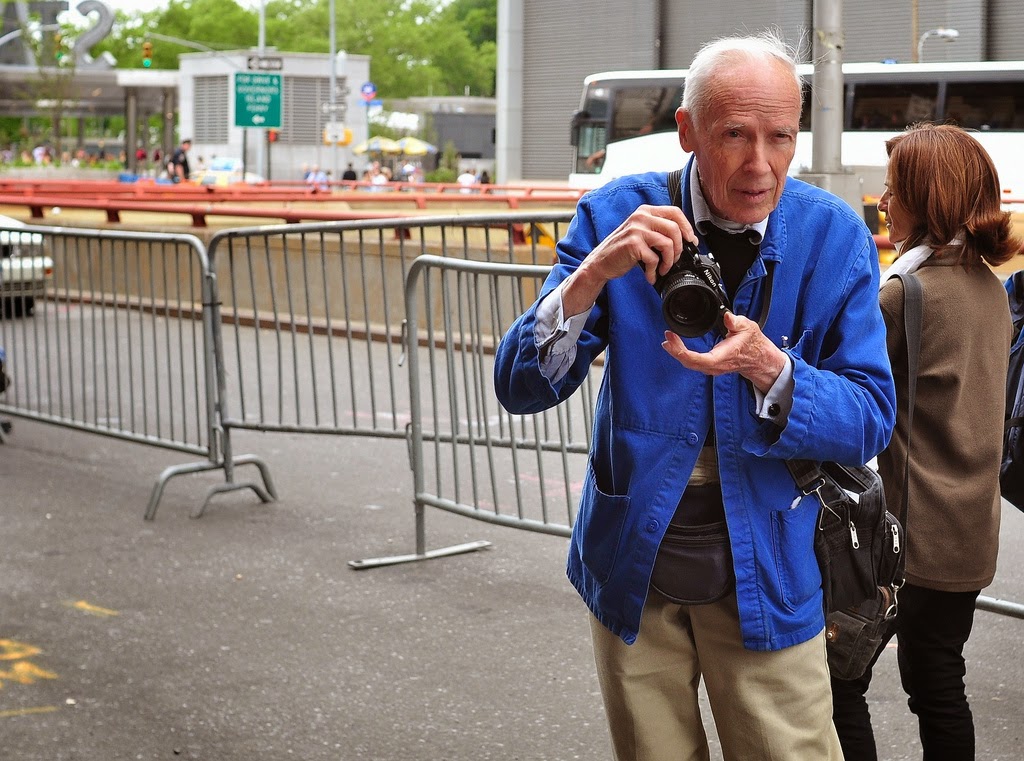
While watching the trailer, I knew I was in for a good time when Vogue editor Anna Wintour (made infamous by, The Devil Wears Prada) quips, "We all get dressed for Bill." The trailer is full of testimonials from fashion icons and socialites on photographer Bill Cunningham - the schwinn-riding octogenarian who weaves through Manhattan traffic trying to capture the latest "street style" fashions. Cunningham obsessively documents fashion trends and society charity events for the style section of the Times. I didn't expect much more than a interesting character study, a love letter to NY, or a tribute to a by-gone era of high society. But it was more than that. It was one of the most inspiring films of the year.

Bill Cunningham. This man lives his passion. He initiated the concept of "street style" when he started snapping flower children's threads in the sixties and went on to document emerging street trends through the decades. In his column, Bill presents the definitive fashion show taken right, "On the Street." His meticulously arranged fashion layouts can be read like a thesis in urban anthropology expressing the styles of the times. And in his show, everyone one is treated equal - from societies' grande dames to colorful eccentrics. The only thing that matters is fashion.

This is a man who unapologetically lives life on his own terms. He lives fashion. He sleeps in a tiny studio, his bed squeezed in between file cabinets full of every photo he ever took. He even refused payment for his moon-lighting magazine gig so he wouldn't have to take orders from anyone or "sell out" his vision. He doesn't do it for prestige, money or fame. (He is notoriously camera shy.) He does it for the beauty of the art. On one of the rare occasions where he agreed to accept an award, he tearfully gushed, "You can find beauty if you look for it!"

I found beauty here.

If you love NY, you won't want to miss it.

Movie blessings!
Jana Segal
www.reelinspiration.blogspot.com

Saturday, September 19, 2009

"Séraphine"


In 1905, Séraphine de Senlis, (Yolande Moreau) a dowdy, devout forty-one year housekeeper was told by her guardian angel to start painting. For Séraphine painting was a sacred calling. She took inspiration from nature where she felt the breath of God in the wind and heard him whisper in the trees. She sang hymns of praise to the Holy Virgin as she painted startlingly colorful leaves. While working as his housekeeper, Séraphine was discovered by Wilhelm Uhde (Ulrich Turkur) the German art critic who collected Picasso and championed the naive primitive painter Le Douanier Rousseau. Wilhem became her patron and grouped her works with other naive painters that were dubbed, "The Sacred Heart Painters."

This beautiful film is set in Senlis, Italy (just outside of Paris.) I found it compelling and inspiring to watch Séraphine gather ingredients for paint from nature, food, housekeeping supplies, and even turpentine from the votive candles at the Catholic cathedral. During the day, she toiled away scrubbing floors and washing sheets in order to support her art. At night she came alive during her sacred ritual of painting.

As an artist and writer, I feel that my creativity is a gift from God. It was inspiring to watch how her spiritual connection to nature and art fed her soul. So it was disturbing to me when the voices in her head grew louder and made irrational demands as Séraphine descended into madness.

The film brings up questions about the fine line between artistic genius and madness. Was it a gift from God or just an hallucination? When Séraphine shows her painting of leaves that seem to move on the canvas, the Mother Superior inquires, "Are you sure they are from God?" In her later paintings the boldly colored leaves resemble flickering flames much like the burning bush that spoke to Moses. Perhaps she came too close to seeing the face of God. I may be reading too much into the symbolism here. Though there are times when the symbolism in a film surpasses the filmmaker's intentions.

In the film, the idea of fame and fortune encroach on Séraphine's thoughts and creative inspiration. Perhaps it blocked her divine connection. After she found her patron, she had more time to paint. But she spent less time in nature and singing hymns. Perhaps it was her separation from God that made her crazy. Again I'm reaching. But that's what makes film so powerful - it's ability inspire us to think.

"Séraphine," was the winner of 7 Cesar Awards (French Oscars) including Best Picture and Best Actress (for Yolande Moreau.) Check out this evocative film for yourself and come up with your own interpretation. I would love to hear it.

Movie blessings!
Jana Segal
www.reelinspiration.blogspot.com

READ AN INTERVIEW WITH THE DIRECTOR.